Showing posts with label Brand. Show all posts

Friday, 28 December 2012

2012’s social media marketing hits and misses


With social media, it couldn’t be easier for brands to connect with their fans and launch new marketing campaigns. Sometimes, they get it so right we have to commend them. Other times, they get it so wrong that we can’t help but facepalm in their general direction. Join us for a run-down of this year’s memorable moments, successes and mishaps of online marketing.

Hits

Samsung

With it being so easy to connect with brands these days, fans can get in touch with the wildest requests. One man this year visited the Samsung Canada Facebook page to ask for a free Galaxy S III smartphone in exchange for his crude drawing of a dragon. At first, Samsung declined the request but gave the fan a similarly child-like doodle of a kangaroo instead. The exchange went viral on Reddit and, apparently delighted with the free publicity the eager fan’s request earned, Samsung decided to fulfil his request after all – complete with custom dragon packaging, covers and wallpaper.
Fan's custom Samsung Galaxy S III

ASOS

Someone, somewhere picked up that this seemingly innocent blouse with contrast piping bears a strikingly phallic symbol on the chest, and what was seen could never be unseen. The hashtag #penisblouse began trending on Twitter and, instead of being embarrassed, ASOS cleverly turned the humorous situation into a sales pitch, asking users to tweet images of them wearing the blouse. Even the ASOS team behind the well-endowed creation joined in the fun.
ASOS penis blouse
ASOS penis blouse

Bodyform

When a disgruntled man took to Bodyform’s Facebook page to complain about the lies perpetrated by the brand, the post was a viral success. What was an even bigger hit, though, was Bodyform’s response.
Bodyform Facebook complaint
 

LasVegas.com

When Prince Harry was caught with his pants down in Las Vegas this summer, LasVegas.com spied an opportunity to revitalise its ‘Know the Code’ campaign. The code being, of course, ‘What happens in Vegas, stays in Vegas.’
The site blasted the ‘exploiters’ that outed Harry on Twitter and used the royal scandal to spread its #KnowTheCode hashtag. Tourism in Las Vegas reportedly saw a boost shortly afterwards, but there’s no telling if this was a direct result of the marketers or the allure of the crown jewels.
LasVegas.com #KnowTheCode

Oreos

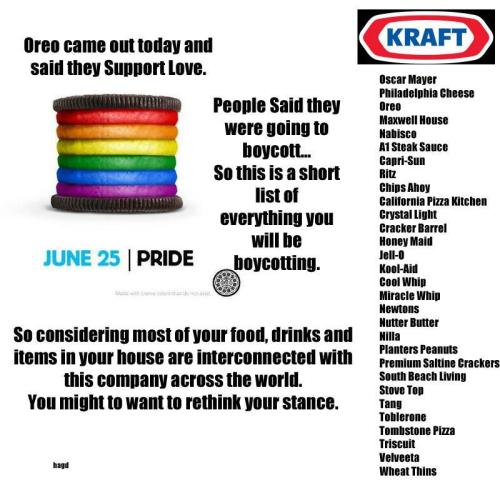
Earlier in the summer, Oreo faced backlash for a post on its Facebook page that saw the famous treats don the rainbow colours for LGBT Pride Month. While Oreo was shouting about its proud support of love, critics of gay marriage began shouting back, threatening to boycott Oreo and parent company Kraft.
Oreo Pride
Others, who met Oreo’s posting with positivity, challenged the naysayers to boycott all companies that have positioned themselves in support of gay rights, including Google, Apple, Amazon, General Motors, Coca-Cola, Microsoft, Nike – the list goes on. Even just a boycott of Kraft foods would leave many cupboards fairly empty.
The stuffed biscuit remains one of the biggest brands on Facebook, with 30m likes and, with the opponents made to look foolish, Oreo (and gay rights) were the real winners this time around.

That Big Event in London

This pop-up brand began selling its ‘reality check’ souvenir tote bags and T-shirts online ahead of the London 2012 Olympic Games. The stg£15 merchandise bore subversive slogans like ‘They’re all on steroids’, ‘It only took me three hours to get to work this morning’ and ‘I’m renting my flat to a fat American family’, though the latter in particular attracted the ire of Team USA’s supporters on Facebook.
That Big Event in London reality check souvenir T-shirts
However, the negative comments did not detract from sales and stock was flying out, with designer Toby Leigh saying plenty of American tourists with a sense of humour were even picking them up.

Susan Boyle’s PR team

An unfortunate sequence of characters, or a marketing genius at work? That was the question when the hashtag selected to promote a listening party and Q&A for Susan Boyle’s new album was #susanalbumparty. Twitter investigator Is Twitter Wrong? discovered that the hashtag double entendre did indeed originate from the officialSusan Boyle Twitter account, but was later changed to #SusanBoyleAlbumParty.
#susanalbumparty
While it’s likely the PR gurus regretted their original choice, we still think they’re winners having achieved wider reach than expected with the dodgy one.

Misses

McDonald’s

What began as a well-intentioned hashtag ended up as a ‘bashtag’ when Twitter users hijacked the McDonald’s #McDStories tag with horror stories from the fast-food chain. References in the tweets ranged from obesity and diabetes to fingernails discovered in fries. Even McDonald’s couldn’t put the genie back in the bottle and, even though the campaign was pulled, the bashtag continues to be used negatively.
#McDStories
#McDStories

Starbucks Ireland

The Starbucks Ireland Twitter account got a little carried away with Queen Elizabeth II’s Diamond Jubilee celebrations this year, apparently forgetting that Ireland is no longer a part of the Queen’s realm. A tweet asking followers what made them proud to be British provoked backlash and prompted an apology from the coffee makers.
Starbucks Ireland

NBC

During the 2012 Olympics, one of the biggest trending topics on Twitter was #NBCfail, owing to the US network’s decision to delay coverage of some events for prime-time viewing, even though there was little viewers could do to avoid hearing the results of every event on various social media channels in the interim. NBC even live tweeted the opening ceremony hours before they would broadcast it themselves. To add more fuel to the fire, the opening ceremony commentators showed their ignorance as country’s names were mispronounced and presenter Bob Costas tried desperately to find something relevant to say about nations he clearly knew very little about.
NBC fail

American Apparel, Gap, Urban Outfitters, CelebBoutique and Kenneth Cole

Piggybacking on a trending topic is a common social media marketing ploy, though that doesn’t mean all trending topics are fair game. Here we have just some of the year’s misguided brands that thought tragic and devastating events such as Hurricane Sandy, the Aurora shooting and the uprising in Egypt were fodder for their marketing messages.
American Apparel
Gap
Urban Outfitters
CelebBoutique
Kenneth Cole

Cinnamon

Cinnamon café in Ranelagh, Dublin, made the headlines this year for breaking the golden rule of interacting with customers on social media: don’t resort to name-calling.
Cinnamon
That said, the Dublin 6 café did sweeten its apology with special discounts on coffee for customers that quoted ‘Twittergate’, retaining some semblance of class.

Celina

But it’s not just brands that need to learn when to hold their tongues on social media, as one Facebook user who decided to use this platform to voice a complaint to Treacy’s Hotel Waterford has learned. Unfortunately, it seems this lady had been misinformed about the events that transpired on her fiancé’s stag weekend. The entire exchange is wonderfully acted out by Final Boss Media below, but beware: NSFW language comes with.
 

Death by social media

And finally, we’ll take a moment to remember those that were mistakenly declared dead by social media users this year. Morgan Freeman is constantly falling victim to these hoaxes, and this year he was joined by Mick Jagger, Bill Cosby, Reese Witherspoon and Keanu Reeves – all of whom are alive and well, I assure you.
Worse still are the tweets from users following the death of a high-profile public figure, confusing the dearly departed with someone else. To clarify: Neil Armstrong, astronaut, died in August 2012; Billie Joe Armstrong, frontman of Green Day, is still going strong.
Neil Armstrong Twitter fails
These are likely the same people that were surprised to find out that the Titanic was real.

Friday, 21 September 2012

Ten steps to increase your brand’s Facebook performance by 30%

Jason Stewart (MD of HaveYouHeard) and his team of Cath Mori, Tracy Dale and Britt Adami, in an effort to understand Facebook Timeline better, tracked just over 30 Facebook Pages, both local and international (including our own Pages which we manage) over the past few weeks since Timeline was introduced. We looked at other studies done by similar agencies internationally, with our ultimate objective being to identify the best practices to use.
It has been widely established that the success of a Facebook Page is not its size, but rather the amount of people engaging with it. This is indicated by the amount of people “Talking About This” (which is measured as a percentage within our study to be able to compare pages of different sizes more accurately).
The reason why we want a higher percentage of people “Talking About This” is to ensure that the brand’s content remains in peoples’ newsfeeds. That is why a high number of “likes” means much less because if only a very small percentage of fans are “Talking About This”, your message is falling on deaf ears. Therefore looking at what percentage of your Page is “Talking about this” is a critical factor in determining your Facebook Page’s success. Anyone can buy “likes”, but it takes smarter thinking to generate higher engagement.
Buzzfeed found that after tracking 200 Pages, the average engagement rate (Talking About This) was less than 0.02%. We focused on the top pages from both South Africa and abroad and those Pages fared much better. We found the average engagement rate was closer to 5% which should be seen as an acceptable benchmark – any lower and your Social Media team needs to start thinking harder about content and engagement.
This article is focused on what we have learnt from our own experience as well as from the best practices of others. Following the advice should bring your “Talking About This” rate above the 5% acceptability benchmark.
Here are our Top 10 Best Practices for Facebook Timeline:
  1. Images are in and copy is out as communication becomes more about visual storytelling. The use of pictures is incredibly important. Forget writing detailed status updates or posts, rather use pictures or specifically designed posts that translate the message visually. The implication for the brand is that more budget needs to be set aside for developing content in this way, but with higher impact you should be able to measure the ROI on your increased spend.
  1. Posting Content : An entire article, or even a book can be written about this topic. The shorter the post, the better. As Buddy Media found out – 80 words or less generates around a 30% better response rate than longer posts. We must not forget that online content has become more intensive than advertising itself as people are constantly bombarded with information, from emails to alerts to articles etc. The quicker they can read, understand and respond to a post, the more chance you have of them doing it.
  1. Questions work much better than statements in terms of creating engagement. Officially, questions generate around 15% higher engagement than statements. We measured it closer to 30%. However, it is not always as simple as asking a question – it is what you ask that is important. Don’t ask ‘Why’ as this requires too much thought and people will more often than not gloss over it. Rather use “When, Should, Where” etc, those that require less thinking and an easier, shorter response.
  1. The type of content a brand posts is critical. This is where creativity comes into play – finding or creating content that is shareable and ensuring it drives the brand message. What we need to know about posting content is that Facebook has something called the Edge Ranking, which is an algorithm that ‘measures’ all content and judges how high up and for how long a piece of content stays in someone’s newsfeed for. The algorithm looks at the affinity between the message creator and the message receiver (how often they interact), the weight of the content (video versus comment versus “like” for example – with the more robust the content, the higher the weighting) and then it looks at time; when it was posted, with the sooner being the better. It shows us that we need to ensure high engagement with all our fans, more robust content (videos and pictures are better than copy), and that we need to post more often than not.
As much as possible, include pictures, links, thumbnail images and videos into posts as they increase your content’s Edge Ranking (interestingly videos that show the actual time length in the post have a higher engagement rate as the user can immediately decide whether they will spend that amount of time watching it).
  1. When to post has become increasingly more important. Because of Facebook’s Ticker (the stories that appear on the right hand side of your page and “tick” continuously as new content is posted), posts now only have a lifespan of roughly 3 hours in a newsfeed. Therefore, posting once a day will not do, we need to post more regularly. This is one of the most neglected but influential ‘rule changers’ for Facebook, as your Page’s “Talking About This” amount will drop if you no longer post enough. What we have noticed is that most brands post between 9am and 5pm. However, a lot of activity goes on after and before business hours and on weekends. Did you know that 30% of women check Facebook during the middle of the night and again first thing as they wake up? Which brands are they engaging with then? We found that Pages that posted more often during the day did not lose fans due to ‘spamming’ them with content, but rather increased their engagement as different parts of their audience saw the different messages at different times of the day.
  1. One of the areas that most brands fall short on is in how they respond on the Page. There is no reason for more than a 24-hour delay. Our aim as an agency is for no longer than a day turnaround for a response, with our goal being to respond within an hour. It is also important to continue to engage with your fans in the comments as this pulls the thread back into newsfeeds.
  1. Pinning and highlighting posts makes it easy for you to pull attention to the most important content. Strategic thought needs to be given to which posts go where. This is prime real estate and your most important messaging and calls-to-action need go here.
  1. Apps are a little more user friendly and can make a Page look great, whilst also helping users with their experience of a brand. It is great for redirecting users to competitions, brand or campaign websites or customer care. But what is more important is that a user’s interaction is recorded by Facebook’s Social Graph – which means that this activity gets pulled into your newsfeed, improving your brand’s exposure. Apps allow more reasons for users to engage with you, spend time on your Page and to share content with others.
  1. The cover photo is the most important real estate on a Facebook Page. One eye-track study noted that users spent more time looking at the cover photo than they did at the wall posts. Good brands change their cover photo about once a week with most only changing it every 3 to 4 weeks. Much more attention needs to be given to this. Your cover photo sets the tone for your Page and just like people ‘judge a book by its cover’ so do users judge a Page by its cover photo. Pick ‘n Pay does a really great job in this regard.
  1. Milestones are a great way to provide an immersion into the history of a brand. Again, great visual content can be created for this. Creatives should get involved in building up the brand story as it offers the opportunity to educate and transform how a consumer understands your brand. Ensure that the content you post is engaging and visual.

With these 10 tips, we hope you are able to improve, possibly even drastically, your brand’s performance on Facebook