

Showing posts with label Social Media. Show all posts
Showing posts with label Social Media. Show all posts
Sunday, 24 November 2013
How to Make the Most of LinkedIn Groups
Are you a member of a LinkedIn group? Do you spend time networking in LinkedIn groups? LinkedIn groups are great way to build credibility and make new connections that can ultimately help grow your business.
You can join up to 50 LinkedIn groups. However, it’s difficult to gain traction in 50 groups as well as find the time to participate in that many. I recommend that you go ahead and join up to 50 groups, but select 5-10 groups to spend your time on in order to get the most benefit out of your participation.
With over 1.5 million LinkedIn Groups, it can be difficult to find relevant groups and determine which ones might be the best for you to join. It is also important to find groups that are well-managed. Unfortunately there are many LinkedIn groups that are not well-managed and that makes the experience within these groups less than optimal. Not to worry, I’m going to give you some insights on how to find the quality groups.
Below are 5 tips for maximizing your LinkedIn groups experience.
#1) Use LinkedIn Search to Find Relevant Groups to Join
In case you haven’t noticed, LinkedIn search has been significantly enhanced. This includes the ability to search for relevant groups (based on your network) and it also includes the ability to search for discussion topics within open groups!
To start with, search for groups using keywords that would be a natural fit for you based on your geographical location, industry, prospects, alumni, community/charity organizations, hobbies and interests. Try searching LinkedIn Groups with the keywords that actually describe your natural affinities. For example, type in the name of the college you attended to find potential alumni groups that exist on LinkedIn.
You can also take advantage of Boolean search operators for smarter searches on LinkedIn. (I recently discovered this Tip Sheet on Boolean Search from LinkedIn Corporate Solutions). To locate a LinkedIn Group that was in my geographical location and my industry, I searched LinkedIn Groups using the Boolean Search Operator “AND” for the keywords (social media AND Dallas). LinkedIn showed me 25 results of groups based in Dallas AND focused on social media!
Another interesting finding was when I typed the word “hiking” into LinkedIn Group search, I found a group with over 1000 members who share this passion. There is no better way to start relationships than connecting around a common passion or interest!
For each LinkedIn Group that is displayed in search results, you have the option to view members in your network who belong to the group as well as “similar groups”.
You can even reach out to your LinkedIn connections and ask them what they think about the groups that they belong to. This gives you a solid reason to reach out and connect with your network.
LinkedIn group search is extremely powerful for discovering the right groups to join.
#2) Review the “Groups You May Like” Suggestions from LinkedIn
The easiest way to navigate to the “Groups You May Like” feature is through your to navigation menu bar under “Groups”. There you will see these options. (The Groups Directory option is the primary search area for LinkedIn Groups)
When you click on the “Groups You May Like” feature, LinkedIn will list suggested groups for you to check out based on your network connections, profile information, skills and expertise, and existing group memberships. (You may also notice some groups (or subgroups) on this list that you already belong to.
#3) Evaluate the Quality of a LinkedIn Group
How do you know if the LinkedIn group you are interested in joining is going to be a well run, quality group?
In some cases, you may just have to join the group and spend some time there to make that determination. However, here are a few ways to evaluate the group for quality:
Is this LinkedIn Group a Quality Group?
-Who is the group manager, and are they engaged and visible?
-What are the group rules? (hint: if the group rules don’t exist or they are not well written, chances are the group is not well-managed)
-Do a good majority of the discussions involve questions and dialogue?
-Are there lots and lots of promotional links or an abundance of “self-promotion”?
-Are the top influencers in the group credible?
-Is the group manager among the top influencers?
In a well-managed group, you are going to most likely see a manager who is visible throughout the discussions and a strong set of rules.
The quantity of membership and the activity level of a group aren’t always correlated to whether or not the group a quality group. I’ve seen some very large groups that are very well-managed and some very small groups that aren’t managed at all!
Be sure to evaluate the stats of the LinkedIn group you are interested in as well. There you can learn more about member demographics, activity, how long the group has been around, and more.
#4) Consider Joining Corporate Sponsored Groups
There are a number of corporate sponsored groups popping up on LinkedIn. This is where LinkedIn has officially partnered with brands or corporations to help them build robust groups. Within each of these groups, the organization can drive member visits and discussion participation while also controlling the ad display space within the group site.
Examples of these corporate LinkedIn Groups include: Intuit (small business group), Citi (Professional women’s network), Staples (small business network), and Capital One (Business traveler network).
What I love about corporate sponsored groups on LinkedIn is that they are very well-managed. The discussions tend to be in-depth with rich dialogue amongst members. These brands/corporations have a vested interest in making their groups successful, and in every case there are dedicated group managers in place who facilitate the dialogue and keep the groups spam-free.
I have found as a member of several of the groups listed above that the discussion questions submitted weekly (and delivered via email) by these group managers are intriguing and enticing. They make you want to jump right in and give your own insights and opinions!
If you run your own LinkedIn group or you’re thinking about starting one, you could learn some terrific strategies as a member of these corporate sponsored groups.
#5) Adhere to LinkedIn Group Participation Best Practices
In order to make LinkedIn Groups serve as authentic forums for discussions and dialogue, we can all do our part to maintain the integrity of the groups we belong to. This will make the LinkedIn Group experience better for everyone.
Additionally LinkedIn is doing its part by helping group managers fight promotional posts. If you are thinking about posting a discussion that contains the words me, my, or I, don’t count on it showing up. Most likely it will end up under the “promotions” tab where it’s highly unlikely that anyone will see it.
In order to successfully build influence in LinkedIn groups, your best bet is to authentically engage in discussions and contribute value-added insights.
Below are some best practices to remember as you find the right groups to join and start engaging with members:
-don’t just drop into groups and promote your products or services
-don’t auto-post your blog articles into LinkedIn groups (Instead, provide links to reputable sources of information within the context of discussions that can help members. This can include your blog articles if they truly serve that purpose.)
-ask questions and provide thoughtful answers
-contribute to ongoing discussions and new discussions consistently
-share meaningful, helpful, interesting, and reputable content
-send invites to connect with mutual group members only after you’ve spent some time participating in the group (Ideally the best time to send the invitation is when you’ve interacted with members in a discussion!)
I hope that these tips will help you make the most of your LinkedIn groups experience. LinkedIn groups provide an amazing opportunity to position yourself as a thought leader and an influencer. If you lead by example with your participation, others will follow.
Are you spending time in LinkedIn groups? How do you find the right groups to join? What are your thoughts about the value of LinkedIn groups? Leave your comments below.

Sunday, 3 March 2013
What Is Changing With Social Media In 2013?
Facebook has now reached 1 billion users and other Social Media sites are thriving. How can we use this as an advantage to creating customers?
1. With so many choices, how will we continue to use all
of these media outlets? Facebook, Twitter, Google+, LinkedIn, YouTube,
Instagram, Pinterest, Foursquare and Tumblr are the top 9 sites you need to be
on right now with complete profiles and solid, interesting compelling content.
You can post to many of these sites using aggregators like HooteSuite or
SocialOomph.
2. Who will be around in 5 years, and who will fade! Top
5 listed above will be around, others may fade and new ones will arrive.
3. How to create engaging content? Quality fun
photos, creative videos, well written blogs, articles and press releases.
4. What processes can we take to make the most out of our
social media campaigns? Hire someone to manage this for you or if
doing it yourself, plan on 15 to 20 hours per week. Create and control your
online brand, build a massive targeted following and tie it into a search
marketing campaign. Build a list and create a relationship to the list with
email or video sales funnels.
5. What's the future hold for SEO? Search Engine
Optimization is not going away but I feel it has lost some of its importance.
Social Media Sites, Articles, Videos and Blogs are getting ranked on Page One
of Google faster and staying longer.
6. How are the big players controlling the way we use
social media? The big players, meaning Facebook, Twitter, YouTube,
Google+ and LinkedIn? They are all doing their best to make the user experience
better while including a way for businesses to reach new customers.
7. Community meets entertainment, what's the future hold
for our online experience? Online experience will become more like
television. More videos will be watched, added to websites, Social Media sites
and blog platforms. More videos will be watch on smart phones and tablets.
Vlogging is hot right now.
8. How being connected opens your influential reach? Love
this question. Brand yourself as a leader by creating excellent content and
building a massive following. You don't need to be a rockstar, athlete,
actor/actress and politician to be famous anymore. Create your own
industry/niche network.
9. What are some of the biggest misconceptions? That
it's easy and a teenager can do it. Social Media and Internet Marketing MUST
become part of your monthly marketing budget.
10. How to distinguish ourselves in Social Media, is it
for friends, is it for business, what impressions do we create online? Brand
yourself as a leader and expert in your industry. Then build a massive
following and email list. If this is done correctly, you will attract your
clients to you. Selling will be easy.
Sunday, 10 February 2013
Are You Prepared To Make The Leap To Social Media Marketing? Read On!
TIP! You must interact with your site visitors on all social media pages where you have a presence. Failing to interact with visitors can mean instant death for any social media page.
You need to have a presence online and the best way for this is to be on the websites that many people use often. There is no place that is easier to accomplish that than on the social media sites. Social media helps you gain attention, it’s the perfect place to market. It can actually play a major part in the success or failure of your business. The article includes some good social marketing tips that can help you succeed.
TIP! It is extremely important to create a headline for your site that is both creative and eye catching. Depending on the site, a headline may be the only thing that shows up in your posts.
The more interesting your content, the greater your website traffic will be. Create “how-to” articles which explain a task that many would seek the answer to. Write a product review with useful additional information, such as alternate uses, and include photographs or a video. Having good content will make people that visit your page want to share it.
TIP! It’s true that you should target your niche, but you also need to have content that’s broad enough to appeal to others. Make sure your postings are funny and steer clear of technical language.
Consider allowing your viewers to review your product and enter those reviews either on your website or Facebook. This enables visitors to write reviews and share material with others quickly and easily. You can edit the reviews and take out the ones you wish. Think about holding a raffle for some virtual prize to encourage visitors to write reviews.
Social Media Sites
TIP! Combine email marketing with social media marketing. At the end of your emails, include a Twitter or Facebook link and advise recipients that their questions will receive personal answers when posed on these websites.
To get the best results from social media, create links that tie them all together. Add links to social media sites on your blog, your website, and any social media profile that you own. On the profile you have for Twitter, have a URL leading to your Facebook and to your blog. When you have links that connect all of your different social media sites, that can help increase your customer base.
TIP! To start off successfully in social media marketing, until you find your own voice, simply fake it until you make it. Take a look at what your strongest competition is doing, and model your early efforts after their most successful tactics.
It’s important to be patient when creating your social media marketing strategy. If you have to spend money on any social trends, and give you you may not succeed. Develop a plan which includes your specific strategies and a reasonable timeline to follow.
TIP! When using public forums for social media marketing, it is most important to maintain a good relationship with the other users of the forum. Even though these users have the potential to become your own customers, they will be much more inclined to try your products if you provide honest, straightforward information, rather than an aggressive sales tactic.
Share information about your business on social media sites. You could try getting involved with community functions or have pictures up of a fund raiser. Social media can be a place where you allow employees to share work experiences and photographs of themselves at your place of business with the public, as long as you make sure you review all material before it’s posted on your site. Utilize those things that will help you convey a positive company image.
TIP! Gaining potential buyers can be as simple as having a live question and answer discussion on your site. This allows people to learn about your special offers and about how your business functions.
Inform your customers that you are utilizing social media. If they join your page, most social media sites inform all of their connections that they are following your page. This form of advertising is free and accessible to a broad range of people. Also, it provides a credible and reliable source, which is better than a simple promotion.
TIP! Apply relevant hash tags whenever possible to boost the number of individuals who see your Twitter content. For example, if you want to share a few guitar tips, use a few tags like #guitar and #rock.
Start a conversation with your customers. Too many social media plans ignore the fact that in this field, customer feedback can be the start of an extended conversation. Take your responses to the next level by opening a dialogue with your customers. Be passionate about learning what their needs are, and allow this to energize your next big move, or spur creative ideas to make your company better.
Social Media
TIP! You can maintain interest in your page by automating Twitter. If you automate you Twitter account, other blog posts can be auto-tweeted.
If you use the information you’ve learned here, you’ll be impressed at the results you’ll see from your social media marketing. If you’re not familiar with social media, you will soon how effective it can be when marketing.
You need to have a presence online and the best way for this is to be on the websites that many people use often. There is no place that is easier to accomplish that than on the social media sites. Social media helps you gain attention, it’s the perfect place to market. It can actually play a major part in the success or failure of your business. The article includes some good social marketing tips that can help you succeed.
TIP! It is extremely important to create a headline for your site that is both creative and eye catching. Depending on the site, a headline may be the only thing that shows up in your posts.
The more interesting your content, the greater your website traffic will be. Create “how-to” articles which explain a task that many would seek the answer to. Write a product review with useful additional information, such as alternate uses, and include photographs or a video. Having good content will make people that visit your page want to share it.
TIP! It’s true that you should target your niche, but you also need to have content that’s broad enough to appeal to others. Make sure your postings are funny and steer clear of technical language.
Consider allowing your viewers to review your product and enter those reviews either on your website or Facebook. This enables visitors to write reviews and share material with others quickly and easily. You can edit the reviews and take out the ones you wish. Think about holding a raffle for some virtual prize to encourage visitors to write reviews.
Social Media Sites
TIP! Combine email marketing with social media marketing. At the end of your emails, include a Twitter or Facebook link and advise recipients that their questions will receive personal answers when posed on these websites.
To get the best results from social media, create links that tie them all together. Add links to social media sites on your blog, your website, and any social media profile that you own. On the profile you have for Twitter, have a URL leading to your Facebook and to your blog. When you have links that connect all of your different social media sites, that can help increase your customer base.
TIP! To start off successfully in social media marketing, until you find your own voice, simply fake it until you make it. Take a look at what your strongest competition is doing, and model your early efforts after their most successful tactics.
It’s important to be patient when creating your social media marketing strategy. If you have to spend money on any social trends, and give you you may not succeed. Develop a plan which includes your specific strategies and a reasonable timeline to follow.
TIP! When using public forums for social media marketing, it is most important to maintain a good relationship with the other users of the forum. Even though these users have the potential to become your own customers, they will be much more inclined to try your products if you provide honest, straightforward information, rather than an aggressive sales tactic.
Share information about your business on social media sites. You could try getting involved with community functions or have pictures up of a fund raiser. Social media can be a place where you allow employees to share work experiences and photographs of themselves at your place of business with the public, as long as you make sure you review all material before it’s posted on your site. Utilize those things that will help you convey a positive company image.
TIP! Gaining potential buyers can be as simple as having a live question and answer discussion on your site. This allows people to learn about your special offers and about how your business functions.
Inform your customers that you are utilizing social media. If they join your page, most social media sites inform all of their connections that they are following your page. This form of advertising is free and accessible to a broad range of people. Also, it provides a credible and reliable source, which is better than a simple promotion.
TIP! Apply relevant hash tags whenever possible to boost the number of individuals who see your Twitter content. For example, if you want to share a few guitar tips, use a few tags like #guitar and #rock.
Start a conversation with your customers. Too many social media plans ignore the fact that in this field, customer feedback can be the start of an extended conversation. Take your responses to the next level by opening a dialogue with your customers. Be passionate about learning what their needs are, and allow this to energize your next big move, or spur creative ideas to make your company better.
Social Media
TIP! You can maintain interest in your page by automating Twitter. If you automate you Twitter account, other blog posts can be auto-tweeted.
If you use the information you’ve learned here, you’ll be impressed at the results you’ll see from your social media marketing. If you’re not familiar with social media, you will soon how effective it can be when marketing.
Sunday, 27 January 2013
12 Unexpected Social Media Tips
Believe it or not, social media extends beyond Facebook and Twitter. It’s any website where people can discuss content. YouTube is social media. Your blog is social media. Pinterest is social media. And yes, Facebook and Twitter are too. So if you want to leverage social media in a big way in 2013, consider these strategies:
1. Talk less about you and more about others. Share more about others, and you become a curator. You become a source of the best from everyone else, and a person who attracts attention.
2. Create roundup content. Instead of doing your own blog posts only, create posts that are an accumulation of ideas and thoughts from many experts in your industry.
3. More than mobile devices. Lots of us live on our smartphones, but make sure your content is also ready for laptops, notebooks, tablets, desktops and game systems.
4. Be real, be you. You’d think this would go without saying. When you’re being you, you’re the most comfortable, right? Yet we all still reach for a mask when we’re around others. That’s fake and inauthentic, as well as being a real energy suck. The only people you’re making happy are the people who aren’t interested in the real you. What fun is that? Being anything but yourself is a losing proposition.
5. Pictures! Pictures! Pictures! Not only is a picture worth a 1,000 words, it draws at least 1,000 eyeballs, wait—2,000 eyeballs. Photographs constantly outperform text, cartoons, links and videos. Images rule. Use more of them.
6. Customer services monitoring. Set up your social media to watch for your name. If people are talking about you, you need to be ready to respond.
7. Dump surveys monitor media. Asking people what they think is WAY different from listening to people talk openly about you. Surveys are notorious for giving false positive feedback. Instead monitor social media to see how people are talking about you. You can collect some insightfully critical feedback. And you should be monitoring social media anyway, so you can give immediate, timely customer support.
8. Pinpoint locations. When problems (or opportunities) arise, you can use social media tools to pinpoint where the discussions are coming from. Maybe that ad you ran that was so well received well by people in the western U.S. is offensive to people in the eastern U.S. (because it bastardized their state motto or made fun of them somehow). Once you know the location of the problem, you can fix it fast.
9. Retweet. Get in the practice of retweeting your followers’ content, quotes and comments. It lets them know you’re actually reading, promoting and supporting those who support you.
10. Inspire. There are only about, oh a million websites that curate or collect really quotable quotes. Find those sites and share the quotes you find inspiring, insightful or moving. Don’t be afraid to link to a site with a video that has nothing to do with business, but everything to do with what moves people to do great things.
11. Solve problems. You don’t have to be Mother Teresa, but jump in and answer questions, solve problems and provide links, information or other resources to questions people pose. You may not answer all of them, but answer as many as you can. Be known as someone who is willing and able to help others. You don’t have to give yourself away, but you should be giving back.
12. Engage. It’s not enough to sit back and watch. Get off the bench. Engage with your followers, your fans and your critics. Answer questions, make comments, have conversations. Show people you’re a real person and not just sitting back somewhere counting your money while the social media show rolls on. It doesn’t have to be rock star content every time, but it does have to be real, be positive and be relevant.
The power of social media is in its ability to influence others. You can’t influence people if they don’t know you and you don’t know them. Think about ways you make an impact on people that lasts. When it comes to making an impact on social media, the rules are pretty much the same—listen, be humble, be real, be honest, be helpful, be there. Now go. Make an impact!
1. Talk less about you and more about others. Share more about others, and you become a curator. You become a source of the best from everyone else, and a person who attracts attention.
2. Create roundup content. Instead of doing your own blog posts only, create posts that are an accumulation of ideas and thoughts from many experts in your industry.
3. More than mobile devices. Lots of us live on our smartphones, but make sure your content is also ready for laptops, notebooks, tablets, desktops and game systems.
4. Be real, be you. You’d think this would go without saying. When you’re being you, you’re the most comfortable, right? Yet we all still reach for a mask when we’re around others. That’s fake and inauthentic, as well as being a real energy suck. The only people you’re making happy are the people who aren’t interested in the real you. What fun is that? Being anything but yourself is a losing proposition.
5. Pictures! Pictures! Pictures! Not only is a picture worth a 1,000 words, it draws at least 1,000 eyeballs, wait—2,000 eyeballs. Photographs constantly outperform text, cartoons, links and videos. Images rule. Use more of them.
6. Customer services monitoring. Set up your social media to watch for your name. If people are talking about you, you need to be ready to respond.
7. Dump surveys monitor media. Asking people what they think is WAY different from listening to people talk openly about you. Surveys are notorious for giving false positive feedback. Instead monitor social media to see how people are talking about you. You can collect some insightfully critical feedback. And you should be monitoring social media anyway, so you can give immediate, timely customer support.
8. Pinpoint locations. When problems (or opportunities) arise, you can use social media tools to pinpoint where the discussions are coming from. Maybe that ad you ran that was so well received well by people in the western U.S. is offensive to people in the eastern U.S. (because it bastardized their state motto or made fun of them somehow). Once you know the location of the problem, you can fix it fast.
9. Retweet. Get in the practice of retweeting your followers’ content, quotes and comments. It lets them know you’re actually reading, promoting and supporting those who support you.
10. Inspire. There are only about, oh a million websites that curate or collect really quotable quotes. Find those sites and share the quotes you find inspiring, insightful or moving. Don’t be afraid to link to a site with a video that has nothing to do with business, but everything to do with what moves people to do great things.
11. Solve problems. You don’t have to be Mother Teresa, but jump in and answer questions, solve problems and provide links, information or other resources to questions people pose. You may not answer all of them, but answer as many as you can. Be known as someone who is willing and able to help others. You don’t have to give yourself away, but you should be giving back.
12. Engage. It’s not enough to sit back and watch. Get off the bench. Engage with your followers, your fans and your critics. Answer questions, make comments, have conversations. Show people you’re a real person and not just sitting back somewhere counting your money while the social media show rolls on. It doesn’t have to be rock star content every time, but it does have to be real, be positive and be relevant.
The power of social media is in its ability to influence others. You can’t influence people if they don’t know you and you don’t know them. Think about ways you make an impact on people that lasts. When it comes to making an impact on social media, the rules are pretty much the same—listen, be humble, be real, be honest, be helpful, be there. Now go. Make an impact!
Friday, 28 December 2012
2012’s social media marketing hits and misses
With social media, it couldn’t be easier for brands to connect with their fans and launch new marketing campaigns. Sometimes, they get it so right we have to commend them. Other times, they get it so wrong that we can’t help but facepalm in their general direction. Join us for a run-down of this year’s memorable moments, successes and mishaps of online marketing.
Hits
Samsung
With it being so easy to connect with brands these days, fans can get in touch with the wildest requests. One man this year visited the Samsung Canada Facebook page to ask for a free Galaxy S III smartphone in exchange for his crude drawing of a dragon. At first, Samsung declined the request but gave the fan a similarly child-like doodle of a kangaroo instead. The exchange went viral on Reddit and, apparently delighted with the free publicity the eager fan’s request earned, Samsung decided to fulfil his request after all – complete with custom dragon packaging, covers and wallpaper.

ASOS
Someone, somewhere picked up that this seemingly innocent blouse with contrast piping bears a strikingly phallic symbol on the chest, and what was seen could never be unseen. The hashtag #penisblouse began trending on Twitter and, instead of being embarrassed, ASOS cleverly turned the humorous situation into a sales pitch, asking users to tweet images of them wearing the blouse. Even the ASOS team behind the well-endowed creation joined in the fun.


Bodyform
When a disgruntled man took to Bodyform’s Facebook page to complain about the lies perpetrated by the brand, the post was a viral success. What was an even bigger hit, though, was Bodyform’s response.

LasVegas.com
When Prince Harry was caught with his pants down in Las Vegas this summer, LasVegas.com spied an opportunity to revitalise its ‘Know the Code’ campaign. The code being, of course, ‘What happens in Vegas, stays in Vegas.’
The site blasted the ‘exploiters’ that outed Harry on Twitter and used the royal scandal to spread its #KnowTheCode hashtag. Tourism in Las Vegas reportedly saw a boost shortly afterwards, but there’s no telling if this was a direct result of the marketers or the allure of the crown jewels.

Oreos
Earlier in the summer, Oreo faced backlash for a post on its Facebook page that saw the famous treats don the rainbow colours for LGBT Pride Month. While Oreo was shouting about its proud support of love, critics of gay marriage began shouting back, threatening to boycott Oreo and parent company Kraft.

Others, who met Oreo’s posting with positivity, challenged the naysayers to boycott all companies that have positioned themselves in support of gay rights, including Google, Apple, Amazon, General Motors, Coca-Cola, Microsoft, Nike – the list goes on. Even just a boycott of Kraft foods would leave many cupboards fairly empty.
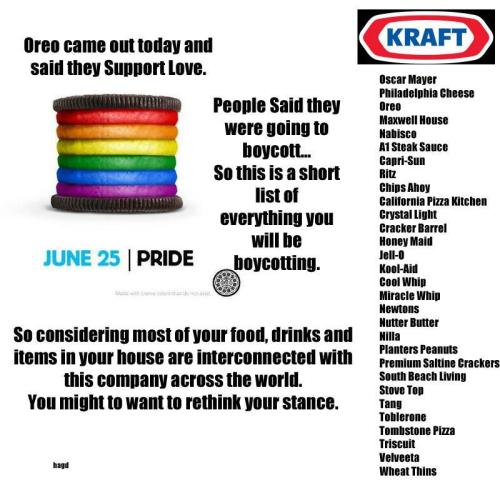
The stuffed biscuit remains one of the biggest brands on Facebook, with 30m likes and, with the opponents made to look foolish, Oreo (and gay rights) were the real winners this time around.
That Big Event in London
This pop-up brand began selling its ‘reality check’ souvenir tote bags and T-shirts online ahead of the London 2012 Olympic Games. The stg£15 merchandise bore subversive slogans like ‘They’re all on steroids’, ‘It only took me three hours to get to work this morning’ and ‘I’m renting my flat to a fat American family’, though the latter in particular attracted the ire of Team USA’s supporters on Facebook.

However, the negative comments did not detract from sales and stock was flying out, with designer Toby Leigh saying plenty of American tourists with a sense of humour were even picking them up.
Susan Boyle’s PR team
An unfortunate sequence of characters, or a marketing genius at work? That was the question when the hashtag selected to promote a listening party and Q&A for Susan Boyle’s new album was #susanalbumparty. Twitter investigator Is Twitter Wrong? discovered that the hashtag double entendre did indeed originate from the officialSusan Boyle Twitter account, but was later changed to #SusanBoyleAlbumParty.

While it’s likely the PR gurus regretted their original choice, we still think they’re winners having achieved wider reach than expected with the dodgy one.
Misses
McDonald’s
What began as a well-intentioned hashtag ended up as a ‘bashtag’ when Twitter users hijacked the McDonald’s #McDStories tag with horror stories from the fast-food chain. References in the tweets ranged from obesity and diabetes to fingernails discovered in fries. Even McDonald’s couldn’t put the genie back in the bottle and, even though the campaign was pulled, the bashtag continues to be used negatively.


Starbucks Ireland
The Starbucks Ireland Twitter account got a little carried away with Queen Elizabeth II’s Diamond Jubilee celebrations this year, apparently forgetting that Ireland is no longer a part of the Queen’s realm. A tweet asking followers what made them proud to be British provoked backlash and prompted an apology from the coffee makers.

NBC
During the 2012 Olympics, one of the biggest trending topics on Twitter was #NBCfail, owing to the US network’s decision to delay coverage of some events for prime-time viewing, even though there was little viewers could do to avoid hearing the results of every event on various social media channels in the interim. NBC even live tweeted the opening ceremony hours before they would broadcast it themselves. To add more fuel to the fire, the opening ceremony commentators showed their ignorance as country’s names were mispronounced and presenter Bob Costas tried desperately to find something relevant to say about nations he clearly knew very little about.

American Apparel, Gap, Urban Outfitters, CelebBoutique and Kenneth Cole
Piggybacking on a trending topic is a common social media marketing ploy, though that doesn’t mean all trending topics are fair game. Here we have just some of the year’s misguided brands that thought tragic and devastating events such as Hurricane Sandy, the Aurora shooting and the uprising in Egypt were fodder for their marketing messages.


Cinnamon
Cinnamon café in Ranelagh, Dublin, made the headlines this year for breaking the golden rule of interacting with customers on social media: don’t resort to name-calling.

That said, the Dublin 6 café did sweeten its apology with special discounts on coffee for customers that quoted ‘Twittergate’, retaining some semblance of class.
Celina
But it’s not just brands that need to learn when to hold their tongues on social media, as one Facebook user who decided to use this platform to voice a complaint to Treacy’s Hotel Waterford has learned. Unfortunately, it seems this lady had been misinformed about the events that transpired on her fiancé’s stag weekend. The entire exchange is wonderfully acted out by Final Boss Media below, but beware: NSFW language comes with.
Death by social media
And finally, we’ll take a moment to remember those that were mistakenly declared dead by social media users this year. Morgan Freeman is constantly falling victim to these hoaxes, and this year he was joined by Mick Jagger, Bill Cosby, Reese Witherspoon and Keanu Reeves – all of whom are alive and well, I assure you.
Worse still are the tweets from users following the death of a high-profile public figure, confusing the dearly departed with someone else. To clarify: Neil Armstrong, astronaut, died in August 2012; Billie Joe Armstrong, frontman of Green Day, is still going strong.

These are likely the same people that were surprised to find out that the Titanic was real.
Wednesday, 3 October 2012
New privacy fears as Facebook begins selling personal access to companies to boost ailing profits
Facebook is embroiled in a new privacy row after it began selling access to users in order to bolster its profits.
The social networking site is allowing companies to trawl through its 900m users looking for email addresses and phone numbers so it can better target adverts.The changes mean that if you hand over any details when you buy something - as many consumers do - that company can now track you down on Facebook.
The measures appear to be a cynical attempt to sidestep restrictions imposed on Facebook by US regulators due to earlier botched privacy changes.
They have already sparked calls for an official investigation by campaigners who claim that the public have not been properly notified.
The new measures, which have been in effect for weeks, will affect consumers who have handed over personal data when they buy something, which is the majority of people given the rise of Internet shopping
Retailers will then be allowed to compare their own databases with the information on Facebook.
For example, an airline will now be able to target adverts at a consumer who had recently taken a flight to Barcelona.
Another disturbing element is that the adverts could appear on a user’s computer even when they are not on Facebook.
The social networking site is also increasing its monitoring and will work with US-based company Datalogix to see what consumers are buying.
Facebook claimed that there are safeguards attached to the new measures.
Phone numbers and email addresses will be replaced by hash symbols so nobody actually knows who the person is, even if they can track their behaviour.
Users will also have to give permission but campaigners in the US have said that changing the settings is ‘confusing and ineffective’.
The Electronic Privacy Information Centre and the Centre for Digital Democracy have already asked watchdog the Federal Trade Commission to investigate the arrangement.
In a joint letter they said: ‘Facebook did not attempt to notify users of its decision to disclose user information
‘Neither Facebook’s Data Use Policy nor its Statement of Rights and Responsibilities adequately explains the specific types of information Facebook discloses, the manner in which the disclosure occurs, or the identities of the third parties receiving the information.’
Facebook is under pressure to improve on the £1.1bn it makes each year from advertising after its disastrous stock market floatation which saw its shares fall by more than half their value.
Last year it was forced to overhaul its privacy policy after the FTC ruled it had been lying to its users for the past four years.
The serious violations included allowing other companies access to users’ personal information - even after they deleted their accounts.
Under the tough agreement - which applies Britain - Facebook agreed to independent periodic monitoring for the next 20 years to stop it from re-offending.
It also vowed to obtain users ‘express consent’ before making privacy changes.
Facebook privacy engineer Joey Tyson said: ‘As we pursue our goal of making the world more open and connected, we have designed our service to show ads that help people discover products that are interesting to them.
‘We also recognise that our users trust us to protect the information they share on Facebook.
‘Maintaining that trust is a top priority as we continue to grow.’
Sunday, 30 September 2012
Finding fame, and sometimes fortune, in social media
Those who have become 'internet-famous' offer insights to the use of Twitter, Instagram or Tumblr for self-promotion.
Social media has made it easier than ever to catapult from obscurity to prominence. In recent years, the web has blossomed into a more egalitarian version of American Idol, where nobodies compete for attention alongside somebodies.
Today, a teenager posting webcam videos to YouTube can get a movie deal. (For example, Fred: The Movie.)
A 30-something posting one-liners on Twitter can land a TV show on CBS: $#*! My Dad Says. Bloggers creating internet memes are being offered book deals at a dizzying pace.
However, alongside breakout web celebs — not to mention actual celebrities with huge online followings such as Rihanna and Katy Perry — there's a new class of microstars who are highly popular and viral, but have no aspirations of going to Hollywood.
The mobile phone quipster
Mueller created his Twitter account, @itisjoey, in 2010 as he was travelling to compete at the World Horseshoe Tournament in Cedar Rapids, Iowa. He figured using Twitter to comment from a big event might help him draw an audience.
"I didn't get any followers or anything," he recalls. "I guess it wasn't interesting."
Mueller says his personal Tumblr website already had 75,000 followers. He added a link to his Twitter account. Immediately, his follower count jumped. Then a curious thing happened: the numbers kept climbing. In 2012, he hit 440,000.
I'm not sure why," he says. "Sometimes I think I got lucky."
Mueller says he has never purchased followers. He says that posting from noon to 6pm, when people typically spend more time online, helps. He also routinely adopts popular hashtags, especially political ones, which he says helped get him retweeted by organisations including Move On.
The fame hasn't gone to his head, he says, or at least his parents keep him down-to-earth. "They're like, 'You know, you're not really famous. Stay in school."'
The tattoo chronicles
Kimber Turner was bored. In the spring of 2008, when she was a 22-year-old journalism major at Middle Tennessee State University in Murfreesboro, Turner completed all of her courses online. Which is to say, she spent a lot of time on her laptop.
Turner started killing time online by collecting found images of tattoos borrowed mostly from body modification websites. She decided to post the photos on a Tumblr account she hastily titled with an obscenity common among youthful creators of Tumblrs — personalised web pages where ephemera is deposited. In a few months, Turner had 300 followers. Other Tumblr users began emailing pictures and explanations of their own tattoos to her.
"Everybody wanted their story out there," Turner says. "People just really liked how interactive it was."
She said in 2008 she received 200 submissions a day. Four years later, she gets 350 a day. Images are contributed by fans all over the globe.
Today, Turner has more than 695,000 followers. For comparison, when Texts from Hillary went viral on Tumblr earlier this year, it attracted 45,000 followers in a week.
Her secret? Volume. She publishes about 50 photos a day, one every 30 minutes, to keep fans coming back. She also follows Tumblr's other popular users
"There's so many people on Tumblr who post all sorts of random things," Turner says. "Having a focus really lets people connect, and it's a great way to stand out."
Although she took various odd jobs after graduating in 2011, including one as a receptionist for a seamstress, ads on the site earn her $60,000 annually, she says.
"When I realised it could very well just be a full-time job, I nearly had a heart attack," she says. "Now I make more than my parents."
The hyperlocal radio DJ
Jaime Black, 29, says he has been a "huge radio nerd" since he was 15. He cut his teeth at an alternative rock station, Q101 in Chicago, where he graduated from an internship to a weekend producing job.
On the side, in 2005, he began podcasts about Chicago's underground music scene. Called Dynasty Podcasts, the episodes — 10 to 15-minute interviews Black records with local artists and club owners — were made available as MP3s on his website. The response was modest.
Five years later, when he created a SoundCloud account, he saw just how broad his reach could grow. He has amassed more than 43,000 followers on the audio-sharing website, which has been called the "YouTube of audio".
"I was very fortunate to get there early," Black says of SoundCloud, which claims to have 20 million users. "I might have beat some of the larger radio stations to SoundCloud. I didn't see that much non-music content when I started."
Today, Black posts two to 11 shows a week, which he records with a hand-held Olympus digital recorder. His philosophy is, "make it easy for people to discover the content and know right away what it is".
"I'm sharing it on Instagram, Twitter, Tumblr, Pinterest," he says. "I don't just post things without putting some effort into the presentation. All the imaging is uniform. All the metadata is uniform."
In 2011, Black started running local event promotions, just like a radio station. He turned Dynasty Podcasts into a full-time job and said he earned $500 for one hour of work.
"A few years ago it was like, 'Oh, how cute, you have a pretend radio show,' " Black says. "And now, we just did a promotion with Supercuts."
The metropolitan paparazzo
Whenever a new digital service is started, there is a race to claim user names. In January 2011, Liz Eswein, then a senior at New York University, claimed one of the better Instagram user names: @newyorkcity.
"People have said, 'Oh, I thought the city of New York was running it.' " Eswein laughs. "It's like, nope, it's just me."
It is difficult to tell that the feed is not maintained by someone in the mayor's office. Eswein, 23, posts only photos taken in and around the city. Using her iPhone 4S, she sticks to snapshots of familiar landmarks like the Statue of Liberty and Central Park, and pictures taken at local events such as the US Open and New York Fashion Week. One of Eswein's recent snapshots of the Plaza Hotel earned 13,330 likes.
She says she often sees comments from users across the United States and as distant as Australia, South America and Greece.
"Instagram is a great way to see different parts of the world through your phone," she says, "Everyone has a special place in their heart for New York City."
Soon after starting the account, Eswein began attending local Instawalks, where users gather to socialise and take photos. The gatherings publicised her account among the app's power users.
By April 2012, @newyorkcity had 195,000 followers. It jumped to 422,000 after the release of an Instagram app for Android phones. (For some perspective, Lady Gaga's account currently has about 440,000 followers.)
In March, Eswein founded a business with two Instagram users. They now consult with brands, including Evian and Samsung, that are looking to engage users on Instagram.
Does she also keep a personal account on Instagram? "Yeah, but I don't use it at all," she said.
Social media has made it easier than ever to catapult from obscurity to prominence. In recent years, the web has blossomed into a more egalitarian version of American Idol, where nobodies compete for attention alongside somebodies.
Today, a teenager posting webcam videos to YouTube can get a movie deal. (For example, Fred: The Movie.)
A 30-something posting one-liners on Twitter can land a TV show on CBS: $#*! My Dad Says. Bloggers creating internet memes are being offered book deals at a dizzying pace.
However, alongside breakout web celebs — not to mention actual celebrities with huge online followings such as Rihanna and Katy Perry — there's a new class of microstars who are highly popular and viral, but have no aspirations of going to Hollywood.
How they became internet-famous — and made comfortable incomes — offers insights to those who are unsure of how to use Twitter, Instagram or Tumblr to promote themselves or their projects.
The mobile phone quipster
Tattoo photos and stories posted by Kimber Turner on Tumblr.
Like many teenagers, Joey Mueller, 19, spends much of his time texting on his iPhone. But when he taps out a 140-character message and presses send, he's talking to nearly 400,000 people.Mueller created his Twitter account, @itisjoey, in 2010 as he was travelling to compete at the World Horseshoe Tournament in Cedar Rapids, Iowa. He figured using Twitter to comment from a big event might help him draw an audience.
"I didn't get any followers or anything," he recalls. "I guess it wasn't interesting."
Joey Mueller, aka @itisjoey. Photo: Twitter
Now a sophomore majoring in graphic design at the University of Minnesota, he decided to avoid personal messages and focus on observational humour.Mueller says his personal Tumblr website already had 75,000 followers. He added a link to his Twitter account. Immediately, his follower count jumped. Then a curious thing happened: the numbers kept climbing. In 2012, he hit 440,000.
I'm not sure why," he says. "Sometimes I think I got lucky."
Mueller says he has never purchased followers. He says that posting from noon to 6pm, when people typically spend more time online, helps. He also routinely adopts popular hashtags, especially political ones, which he says helped get him retweeted by organisations including Move On.
The fame hasn't gone to his head, he says, or at least his parents keep him down-to-earth. "They're like, 'You know, you're not really famous. Stay in school."'
The tattoo chronicles
Kimber Turner was bored. In the spring of 2008, when she was a 22-year-old journalism major at Middle Tennessee State University in Murfreesboro, Turner completed all of her courses online. Which is to say, she spent a lot of time on her laptop.
Turner started killing time online by collecting found images of tattoos borrowed mostly from body modification websites. She decided to post the photos on a Tumblr account she hastily titled with an obscenity common among youthful creators of Tumblrs — personalised web pages where ephemera is deposited. In a few months, Turner had 300 followers. Other Tumblr users began emailing pictures and explanations of their own tattoos to her.
"Everybody wanted their story out there," Turner says. "People just really liked how interactive it was."
She said in 2008 she received 200 submissions a day. Four years later, she gets 350 a day. Images are contributed by fans all over the globe.
Today, Turner has more than 695,000 followers. For comparison, when Texts from Hillary went viral on Tumblr earlier this year, it attracted 45,000 followers in a week.
Her secret? Volume. She publishes about 50 photos a day, one every 30 minutes, to keep fans coming back. She also follows Tumblr's other popular users
"There's so many people on Tumblr who post all sorts of random things," Turner says. "Having a focus really lets people connect, and it's a great way to stand out."
Although she took various odd jobs after graduating in 2011, including one as a receptionist for a seamstress, ads on the site earn her $60,000 annually, she says.
"When I realised it could very well just be a full-time job, I nearly had a heart attack," she says. "Now I make more than my parents."
The hyperlocal radio DJ
Jaime Black, 29, says he has been a "huge radio nerd" since he was 15. He cut his teeth at an alternative rock station, Q101 in Chicago, where he graduated from an internship to a weekend producing job.
On the side, in 2005, he began podcasts about Chicago's underground music scene. Called Dynasty Podcasts, the episodes — 10 to 15-minute interviews Black records with local artists and club owners — were made available as MP3s on his website. The response was modest.
Five years later, when he created a SoundCloud account, he saw just how broad his reach could grow. He has amassed more than 43,000 followers on the audio-sharing website, which has been called the "YouTube of audio".
"I was very fortunate to get there early," Black says of SoundCloud, which claims to have 20 million users. "I might have beat some of the larger radio stations to SoundCloud. I didn't see that much non-music content when I started."
Today, Black posts two to 11 shows a week, which he records with a hand-held Olympus digital recorder. His philosophy is, "make it easy for people to discover the content and know right away what it is".
"I'm sharing it on Instagram, Twitter, Tumblr, Pinterest," he says. "I don't just post things without putting some effort into the presentation. All the imaging is uniform. All the metadata is uniform."
In 2011, Black started running local event promotions, just like a radio station. He turned Dynasty Podcasts into a full-time job and said he earned $500 for one hour of work.
"A few years ago it was like, 'Oh, how cute, you have a pretend radio show,' " Black says. "And now, we just did a promotion with Supercuts."
The metropolitan paparazzo
Whenever a new digital service is started, there is a race to claim user names. In January 2011, Liz Eswein, then a senior at New York University, claimed one of the better Instagram user names: @newyorkcity.
"People have said, 'Oh, I thought the city of New York was running it.' " Eswein laughs. "It's like, nope, it's just me."
It is difficult to tell that the feed is not maintained by someone in the mayor's office. Eswein, 23, posts only photos taken in and around the city. Using her iPhone 4S, she sticks to snapshots of familiar landmarks like the Statue of Liberty and Central Park, and pictures taken at local events such as the US Open and New York Fashion Week. One of Eswein's recent snapshots of the Plaza Hotel earned 13,330 likes.
She says she often sees comments from users across the United States and as distant as Australia, South America and Greece.
"Instagram is a great way to see different parts of the world through your phone," she says, "Everyone has a special place in their heart for New York City."
Soon after starting the account, Eswein began attending local Instawalks, where users gather to socialise and take photos. The gatherings publicised her account among the app's power users.
By April 2012, @newyorkcity had 195,000 followers. It jumped to 422,000 after the release of an Instagram app for Android phones. (For some perspective, Lady Gaga's account currently has about 440,000 followers.)
In March, Eswein founded a business with two Instagram users. They now consult with brands, including Evian and Samsung, that are looking to engage users on Instagram.
Does she also keep a personal account on Instagram? "Yeah, but I don't use it at all," she said.
Tuesday, 18 September 2012
How To Develop a Successful Social Media Campaign
If you’re at the beginning of your social media journey, your first question should always be about success. Anyone can throw together a social media campaign, or a campaign that uses social media – but very few people can do it successfully. In order to create a social media campaign that works (i.e. that sells and promotes), you need to know where to begin. Courtesy of make1kadaywithimmacc.blogspot.com Here is the basic social media campaign formula:Establish Brand – Gather Community – Interact, Sell, Promote. It looks simple, but it isn’t. People have problems at each step of this basic 3 step process. If your brand identity is wrong, you won’t gain a community or sell stuff – for example. Here is the right process to use when establishing a successful social media campaign.
#1: Research Until You ScreamAll great marketing campaigns are based on effective research. Know your target demographic intimately, what they want, need and are dying to learn about. Research your ideal budget, and investigate how much setting up a campaign is going to cost you. Figure out your time investment. Outline the supporting campaigns that will help fuel your social media marketing campaign – like Google Adwords. Before you begin, learn where you stand, and what’s on the horizon.
#2: Preparing Your Master PlanWhat makes your business different? How can you attract your target demographic and keep them interested? What should your brand identity be, or your writing tone? Use the research you have to answer as many pertinent questions as possible. Your master plan needs to clearly define your goals. This means knowing what you want to achieve, and then outlining a realistic plan to achieve it. Remember – failing to plan, is planning to fail! The most direct route to success is preparation, planning and research.
#3: Creating and Maintaining Awesome Content. The key to a successful social media campaign is getting the research and planning right, and then following through with consistent content creation and interaction. People respond to good content – that’s what you want! But the most important thing of course is sustainability. You need to grow your community and get them to interact. Any way you look at it, the more juicy content the better.
#4: Learning, Adapting, MonitoringThe battle is not over when you have your social media pages up and running. You need to learn all the time from the results that you get with your campaign. Use monitoring tools to track your progress, and review your campaign at the end of every month. The best campaigns are always evolving. As you learn more through application, your social media campaign will get better – especially if you’re a stickler for data analysis. Focus on developing closer relationships with your current community and others will follow. Don’t pour your efforts into growing your community just because you want to ‘look’ like a popular business. Every business is different. Yours might be perfect for Facebook, so focus your efforts there. Start with the basics – Facebook, Twitter, LinkedIn, a blog and a Youtube channel. If you can only manage 1 properly, stick with that for awhile. In the end, when your community grows, they’ll be begging for more!

#1: Research Until You ScreamAll great marketing campaigns are based on effective research. Know your target demographic intimately, what they want, need and are dying to learn about. Research your ideal budget, and investigate how much setting up a campaign is going to cost you. Figure out your time investment. Outline the supporting campaigns that will help fuel your social media marketing campaign – like Google Adwords. Before you begin, learn where you stand, and what’s on the horizon.
#2: Preparing Your Master PlanWhat makes your business different? How can you attract your target demographic and keep them interested? What should your brand identity be, or your writing tone? Use the research you have to answer as many pertinent questions as possible. Your master plan needs to clearly define your goals. This means knowing what you want to achieve, and then outlining a realistic plan to achieve it. Remember – failing to plan, is planning to fail! The most direct route to success is preparation, planning and research.
#3: Creating and Maintaining Awesome Content. The key to a successful social media campaign is getting the research and planning right, and then following through with consistent content creation and interaction. People respond to good content – that’s what you want! But the most important thing of course is sustainability. You need to grow your community and get them to interact. Any way you look at it, the more juicy content the better.
#4: Learning, Adapting, MonitoringThe battle is not over when you have your social media pages up and running. You need to learn all the time from the results that you get with your campaign. Use monitoring tools to track your progress, and review your campaign at the end of every month. The best campaigns are always evolving. As you learn more through application, your social media campaign will get better – especially if you’re a stickler for data analysis. Focus on developing closer relationships with your current community and others will follow. Don’t pour your efforts into growing your community just because you want to ‘look’ like a popular business. Every business is different. Yours might be perfect for Facebook, so focus your efforts there. Start with the basics – Facebook, Twitter, LinkedIn, a blog and a Youtube channel. If you can only manage 1 properly, stick with that for awhile. In the end, when your community grows, they’ll be begging for more!
Monday, 13 August 2012
Social media could turn athlete earnings gold
Olympic athletes are returning home from the London Games, hoping to extend their peak period for endorsement earnings through their increased popularity on social media.Many athletes saw their earnings potential skyrocket during the Games, even existing household names such as Michael Phelps, the US swimmer crowned as the most winning Olympian of all time, and Usain Bolt, the fastest man in the world.The athletes, who both are endorsed by a lineup of global brands, could earn about $50m a year in endorsement deals should they be able to extend their time in the spotlight beyond the halo of the Games, according to SponsorHub, a company that brokers endorsement deals.An athlete’s following on Twitter, Facebook and other social media sites has quickly become key in determining this.“Brands always ask how many followers an athlete has,” said Ricky Simms, director at Pace Sports Management who is Bolt’s worldwide agent. “For many companies, this is the way they want to reach their target customers.”Olympic athletes traditionally had a short time frame to capitalise on their performance in the Games because they quickly fade from the public eye, according to marketing executives. But social media has allowed the athletes to extend relationships with fans by sharing messages, photos and videos. Sponsorship now typically involve some social media promotion through an athlete’s Twitter feed or Facebook page. Before the Games, for instance, Bolt posted messages about his sponsors, such as a picture of a refrigerator filled with bottles of the orange Gatorade sports drink Athletes were not permitted to mention sponsors on social media without a special waiver until a period surrounding the Games, which ends on Wednesday. Advertisers that endorsed Olympians but were not official Olympic sponsors also were barred from promoting that connection during the period surrounding the Games. Marketers that endorse Olympic athletes are expected to release a flurry of ads to congratulate athletes when that blackout period ends. Athletes also are expected to hit social media, thanking their sponsors. Bolt is one of the most followed Olympians with more than 8m Facebook fans and 1.6m Twitter followers. Before the games, Bolt had about 620,000 Twitter followers. Bolt’s existing sponsors include Visa, Puma and Gatorade but he is looking to extend his brand further. Mr Simms said Bolt had recently released a new mobile game and is in discussions about using his signature celebratory pose on products ranging from luxury brands to toiletry items and Jamaican-inspired food products.However, some athletes who experienced a quick leap to fame during the Games are likely to have a harder time translating that into new sponsorship deals. Gabby Douglas, the US gold medal winning gymnast, for instance, saw her Twitter followers spike to more than 654,000 from 29,000 before the Games. While she now ranks among the most sponsorable athletes, her appeal to marketers is likely to drop relatively quickly after the Games because of the short tenure of most gymnasts and a lack of interest in gymnastics throughout the rest of the year, industry executives said.Marketers that endorsed her before the games, such as Procter & Gamble, are likely to see the most benefit.“There is no arguing that Gabby’s value as an endorser is exponentially more valuable now than it was when they signed her,” said Kevin Adler, founder of Engage Marketing, a Chicago sports and entertainment marketing company. “If I am a creative and smart athlete agent, I would include bonus clauses that trigger financial incentives if social media audiences grow.”
Sunday, 29 July 2012
Most Common Mistakes Made on Social Media
If we’ve said it once, we’ve said it 100 times… Social Media Works! (But only when used correctly.) There are many things you can do to reverse the effectiveness of your social media efforts. Today, we will go over a few of those things.
Over Posting/Over Tweeting
There was a particular musical group I was following on Twitter for a while, one morning, they tweeted over 30 times in 30 minutes (more than once a minute). I “unfollowed” them and have never checked out their Twitter feed again. Now, while this might be a bit of an excessive story, the point is: don’t be obnoxious.Some basic guidelines to follow for this (keep in mind that there are rare instances where guidelines need to be broken): 1. Don’t post more than once an hour.
2. Don’t post more than 3 times in a day. (Try to keep it to once in the morning and once in the afternoon, if you can.)
Who Cares?
Don’t talk just to hear the sound of your own voice. In other words, don’t tell your followers and fans things they don’t care about. Make sure when you’re posting it’s something relevant. And never be afraid to ask your followers/fans what they want to hear about!
The Hard Sell
Your social media should primarily be used to connect with customers and potential customers. By doing this, we obviously hope that you will generate more loyal as well as new customers. But would you like to know a good way to not generate more loyal and new customers using social media? Constantly try to sell them on your product! Tell them every day to buy your product because it’s the best. You’ll lose followers/fans faster than you can say “Buy my product.” Now, pictures, fantastic. Informing them about your product, that’s fine. Letting them know when you are running a special, they’d love that! Just do it in a way that’s not an in-your-face sales pitch. They don’t want to hear it.
Preventing Interaction
I went to a page a couple of weeks ago to post something and realized they had the page set so that fans could not post. In our eyes, that basically defeats the purpose. Social media is about interaction. While there are times censor your page, it’s typically good to see the feedback, both good and bad.
So, there you have it! Some of the most common mistakes made on social media! Unfortunately, that doesn’t even begin to cover them all. We didn’t even get into… having the wrong type of page (This needs to be it’s own blog in order to cover everything that needs to be covered) Not giving enough variety in your posts, not encouraging interaction, and so many others.
Over Posting/Over Tweeting
There was a particular musical group I was following on Twitter for a while, one morning, they tweeted over 30 times in 30 minutes (more than once a minute). I “unfollowed” them and have never checked out their Twitter feed again. Now, while this might be a bit of an excessive story, the point is: don’t be obnoxious.Some basic guidelines to follow for this (keep in mind that there are rare instances where guidelines need to be broken): 1. Don’t post more than once an hour.
2. Don’t post more than 3 times in a day. (Try to keep it to once in the morning and once in the afternoon, if you can.)
Who Cares?
Don’t talk just to hear the sound of your own voice. In other words, don’t tell your followers and fans things they don’t care about. Make sure when you’re posting it’s something relevant. And never be afraid to ask your followers/fans what they want to hear about!
The Hard Sell
Your social media should primarily be used to connect with customers and potential customers. By doing this, we obviously hope that you will generate more loyal as well as new customers. But would you like to know a good way to not generate more loyal and new customers using social media? Constantly try to sell them on your product! Tell them every day to buy your product because it’s the best. You’ll lose followers/fans faster than you can say “Buy my product.” Now, pictures, fantastic. Informing them about your product, that’s fine. Letting them know when you are running a special, they’d love that! Just do it in a way that’s not an in-your-face sales pitch. They don’t want to hear it.
Preventing Interaction
I went to a page a couple of weeks ago to post something and realized they had the page set so that fans could not post. In our eyes, that basically defeats the purpose. Social media is about interaction. While there are times censor your page, it’s typically good to see the feedback, both good and bad.
So, there you have it! Some of the most common mistakes made on social media! Unfortunately, that doesn’t even begin to cover them all. We didn’t even get into… having the wrong type of page (This needs to be it’s own blog in order to cover everything that needs to be covered) Not giving enough variety in your posts, not encouraging interaction, and so many others.
Wednesday, 4 July 2012
7 Social Media Strategies for Small Business Owners
Investing in free social media tools is one of the most cost-effective things a small business owner can do to increase brand recognition and awareness, and yet fewer than 20% of SMBs currently have websites that link to popular social media networks like Facebook and Twitter. Why the disconnect? A 2011 survey by Hiscox, a small business insurance agency, found that 24% of SMB owners say they don’t have time to participate in social media marketing, while 14% say they don’t even know where to begin. Here are seven tips from experts in the social media marketing industry about how business owners can take advantage of the social media tools available today.1. Start measuring immediately. It’s important for small businesses to know how they’re doing when it comes to social media — including which tweets are getting the most re-tweets, which Facebook posts are getting the most ‘likes’, and which Tumblr posts are getting the most reblogs. By choosing some metrics that are important and keeping track of those measurements early on, businesses can generate benchmarks that they can look back at to see how they’re faring over time.
2. Timing is everything. When it comes to social media strategy, business owners should make sure they are tapping into the right channels during the optimal time of day. For example, restaurants may benefit from tweeting specials during lunchtime. The best days to send messages are on Tuesdays, Wednesdays, and Thursdays, since Monday is a catch-up day and Friday is too close to the weekend. Also, businesses will get the most traffic by scheduling their messages according to Eastern Standard Time.
3. Use the right platforms. Each social media site has its own particular quirks, and the messages that work on one site won’t necessary work on another. Photos are great on Facebook, Tumblr, and Instagram, but they don’t have the same impact when posted on Twitter. Business owners should experiment to learn which types of content work best on which platforms, and then do more of whatever produces the greatest results.
4. Treat social media as a two-way street. Social media networks like Facebook and Twitter aren’t just a one-way street. Business owners should ideally be writing posts and responding to customers regularly, both as a way to keep customers engaged and to promote social sharing. Industry estimates show that most people have an average of 250 friends on Facebook. Businesses can tap into that network for free when they engage customers in conversations about their products online.
5. Offer exclusive deals and discounts. One of the main reasons why customers follow their favorite brands online is to get access to special deals and offers. Businesses that share special promotions, social-specific deals, and exclusive content on their social media pages are not only giving customers a reason to follow their companies, but also providing an avenue to generate sales via social media.
6. Get smart about check-in sites. Check-in sites like Foursquare provide an excellent opportunity for cross promotion. Businesses can tweet at customers checking-in to thank them for visiting, and then ask those customers to leave their feedback on sites like Google Places and Yelp. Foursquare is also a great place for customer acquisition, since businesses can actively reach out to people checking-in at competing establishments with special offers or deals meant to bring those people in.
7. Integrate social media into other business systems. Social media doesn’t exist in a vacuum. By integrating social channels with existing systems like Google Analytics and Omniture, and using a social media management system, companies can connect the dots and see the role social media is playing in their overall marketing efforts. Business owners should track the traffic that social media networks are driving to their websites and find out whether social media is converting certain activities into pre-defined goals, like sales or customer acquisition.
2. Timing is everything. When it comes to social media strategy, business owners should make sure they are tapping into the right channels during the optimal time of day. For example, restaurants may benefit from tweeting specials during lunchtime. The best days to send messages are on Tuesdays, Wednesdays, and Thursdays, since Monday is a catch-up day and Friday is too close to the weekend. Also, businesses will get the most traffic by scheduling their messages according to Eastern Standard Time.
3. Use the right platforms. Each social media site has its own particular quirks, and the messages that work on one site won’t necessary work on another. Photos are great on Facebook, Tumblr, and Instagram, but they don’t have the same impact when posted on Twitter. Business owners should experiment to learn which types of content work best on which platforms, and then do more of whatever produces the greatest results.
4. Treat social media as a two-way street. Social media networks like Facebook and Twitter aren’t just a one-way street. Business owners should ideally be writing posts and responding to customers regularly, both as a way to keep customers engaged and to promote social sharing. Industry estimates show that most people have an average of 250 friends on Facebook. Businesses can tap into that network for free when they engage customers in conversations about their products online.
5. Offer exclusive deals and discounts. One of the main reasons why customers follow their favorite brands online is to get access to special deals and offers. Businesses that share special promotions, social-specific deals, and exclusive content on their social media pages are not only giving customers a reason to follow their companies, but also providing an avenue to generate sales via social media.
6. Get smart about check-in sites. Check-in sites like Foursquare provide an excellent opportunity for cross promotion. Businesses can tweet at customers checking-in to thank them for visiting, and then ask those customers to leave their feedback on sites like Google Places and Yelp. Foursquare is also a great place for customer acquisition, since businesses can actively reach out to people checking-in at competing establishments with special offers or deals meant to bring those people in.
7. Integrate social media into other business systems. Social media doesn’t exist in a vacuum. By integrating social channels with existing systems like Google Analytics and Omniture, and using a social media management system, companies can connect the dots and see the role social media is playing in their overall marketing efforts. Business owners should track the traffic that social media networks are driving to their websites and find out whether social media is converting certain activities into pre-defined goals, like sales or customer acquisition.
Friday, 29 June 2012
Social media and the value of friendship marketing
The value of social media lies not in what your brand in saying, but in what
other people aresaying about your brand
No one really cares about your brand’s last status update. Your followers
probably didn’t read your Tweet.
At least, they weren’t that bothered until one of their friends
‘liked’ your status update and it appeared in their newsfeed. Or retweeted it
and sent it to their own followers’ streams. In other words, what you have to
say about your brand is often more valuable coming from someone else than from
you.
Mark Zuckerberg was quoted this week as saying that a trusted
referral is the ‘holy grail’ of advertising. It comes in the wake of a $10m
settlement for a lawsuit against Facebook’s right to feature user’s names to
endorse a brand you may have once liked or shared.
Despite a vociferous privacy backlash, these ‘sponsored
stories’ are up to three times more effective than a standard Facebook ad,
according to Facebook chief operating officer Sheryl Sandberg.
Once, word-of-mouth meant a casual mention over a coffee or an
impassioned blog post. These days it’s an inadvertent affiliation of a name with
a brand – achieved via a simple click of a ‘like’ button, a comment, or a
re-Tweet.
As the Facebook settlement has shown, social media users have
proved that they can’t be duped into having their name exploited for commercial
purposes. They want – and deserve – the right to control how their name is used.
So, how do you get people naturally talking about your brand
and sharing on your behalf?
It’s all about content. If you’re posting about a great offer
or something funny that happened at your office summer party, chances are you’re
not going to get much engagement from fans. Nor is social media a sales channel
purely for pushing products.
Instead, find and create content that your audience will find
interesting, novel or funny (depending on your brand’s values) and are therefore
more like to share. Innocent Drinks is a pro at this, posting frivolous and
occasionally outlandish content that is novel enough to disrupt the banality of
their fans’ newsfeeds. (Recently they ran a sequence of comic-book style posts
in which the next frame of a story was determined by comments on the previous.
Fans were even working Innocent products into their answers.) It works, because
that’s who Innocent is: frivolous and occasionally outlandish.
Social media 101 presumes you already know what people are
saying about your brand from a customer service perspective. But to gain your
audience’s trust and to make them more likely to talk about your brand in
general, you need to know what they’re saying about everything else. What does
your audience like? What are they doing when they’re not ‘liking’ your status
update? Join conversations that people are already having.
This does not mean you should jump on every bandwagon and
start hijacking hashtags. Be selective, be appropriate. If you’re in travel, are
you watching and commenting throughout the right travel shows? If you have an
affiliation with sport, are you Tweeting throughout a game?
Social media, like friendship, is a two-way deal. Half a
social media manager’s job is listening: your home feed is one of your most
important tools. And if people feel like you get them, they will vocalise
that.
Another way to encourage people to share is to start
conversations that people want to be involved in. Create conversations that
people want to contribute to and it’s likely that their friends want to join in
too. Ask questions, elicit opinions.
‘How is everybody doing today?’ is not a conversation starter.
‘Marmite crepes?’ is.
Not only is this a great way to build your brand’s visibility,
but it’s also a tool to get to know your audience. Never before have marketers
had such an open forum of opinions and questions. Take advantage of this; you’ll
get more honest answers than any focus group. And you don’t even need to provide
sandwiches.
Lastly, it’s important to remember that your audience is
likely to be more socially savvy than you are – they have the power to control
conversations and express their thoughts – good and bad – to an unquantifiable
crowd. And they have a secret weapon – they’re probably in bed with your
competitors too.
In this sense, you need to exercise respect. Social media has
changed the brand-customer dynamic: remember, they’re no longer your customers.
They’re your friends.
other people aresaying about your brand
No one really cares about your brand’s last status update. Your followers
probably didn’t read your Tweet.
At least, they weren’t that bothered until one of their friends
‘liked’ your status update and it appeared in their newsfeed. Or retweeted it
and sent it to their own followers’ streams. In other words, what you have to
say about your brand is often more valuable coming from someone else than from
you.
Mark Zuckerberg was quoted this week as saying that a trusted
referral is the ‘holy grail’ of advertising. It comes in the wake of a $10m
settlement for a lawsuit against Facebook’s right to feature user’s names to
endorse a brand you may have once liked or shared.
Despite a vociferous privacy backlash, these ‘sponsored
stories’ are up to three times more effective than a standard Facebook ad,
according to Facebook chief operating officer Sheryl Sandberg.
Once, word-of-mouth meant a casual mention over a coffee or an
impassioned blog post. These days it’s an inadvertent affiliation of a name with
a brand – achieved via a simple click of a ‘like’ button, a comment, or a
re-Tweet.
As the Facebook settlement has shown, social media users have
proved that they can’t be duped into having their name exploited for commercial
purposes. They want – and deserve – the right to control how their name is used.
So, how do you get people naturally talking about your brand
and sharing on your behalf?
It’s all about content. If you’re posting about a great offer
or something funny that happened at your office summer party, chances are you’re
not going to get much engagement from fans. Nor is social media a sales channel
purely for pushing products.
Instead, find and create content that your audience will find
interesting, novel or funny (depending on your brand’s values) and are therefore
more like to share. Innocent Drinks is a pro at this, posting frivolous and
occasionally outlandish content that is novel enough to disrupt the banality of
their fans’ newsfeeds. (Recently they ran a sequence of comic-book style posts
in which the next frame of a story was determined by comments on the previous.
Fans were even working Innocent products into their answers.) It works, because
that’s who Innocent is: frivolous and occasionally outlandish.
Social media 101 presumes you already know what people are
saying about your brand from a customer service perspective. But to gain your
audience’s trust and to make them more likely to talk about your brand in
general, you need to know what they’re saying about everything else. What does
your audience like? What are they doing when they’re not ‘liking’ your status
update? Join conversations that people are already having.
This does not mean you should jump on every bandwagon and
start hijacking hashtags. Be selective, be appropriate. If you’re in travel, are
you watching and commenting throughout the right travel shows? If you have an
affiliation with sport, are you Tweeting throughout a game?
Social media, like friendship, is a two-way deal. Half a
social media manager’s job is listening: your home feed is one of your most
important tools. And if people feel like you get them, they will vocalise
that.
Another way to encourage people to share is to start
conversations that people want to be involved in. Create conversations that
people want to contribute to and it’s likely that their friends want to join in
too. Ask questions, elicit opinions.
‘How is everybody doing today?’ is not a conversation starter.
‘Marmite crepes?’ is.
Not only is this a great way to build your brand’s visibility,
but it’s also a tool to get to know your audience. Never before have marketers
had such an open forum of opinions and questions. Take advantage of this; you’ll
get more honest answers than any focus group. And you don’t even need to provide
sandwiches.
Lastly, it’s important to remember that your audience is
likely to be more socially savvy than you are – they have the power to control
conversations and express their thoughts – good and bad – to an unquantifiable
crowd. And they have a secret weapon – they’re probably in bed with your
competitors too.
In this sense, you need to exercise respect. Social media has
changed the brand-customer dynamic: remember, they’re no longer your customers.
They’re your friends.
Thursday, 21 June 2012
B2B Social Marketing Mistakes You're Probably Making
Well, the good news is that businesses have finally come around to the idea that social media is a ripe playing field for their B2B marketing goals. Don’t feel bad if you were late to the party; any place with such an over-abundance of cat videos and Justin Bieber fans would confuse anyone as to whether or not it was the proper arena to conduct business. But the diversity of content and audience is all part of the charm and potential of social media, and when navigated properly, the potential ROI for almost any industry is huge.Unfortunately, the whole B2B/social media relationship isn’t without its own set of growing pains as well. Which is, naturally, to be expected; as exemplified by the aforementioned cat videos and pop stars, figuring out exactly how your business ought to engage on these platforms isn’t perfectly intuitive, nor have these channels been around quite long enough for their to be a widespread, well-established protocol. As a result, a great many businesses are not only failing to maximize the benefit of being present on social media, but they might also be hurting themselves.Here are a few common mistakes in B2B social marketing and how you can avoid them:
Problem: Treating social media like other marketing campaigns – Probably one of the biggest mistakes B2B companies make in their social media efforts is following their usual route of one-way communication. You take your product, and your message, and put it out there for public consumption, and call it a day. In social media, no matter how well-developed or well-styled that message is, if there is no true engagement with your audience, you’re essentially spamming them. And nothing turns off a social media crowd like spamming.
Solution: Talk to people – Obviously, you still want to get your message out there, but in the social media world, there is more to successfully doing so than standing on a soapbox and shouting into the open air. Instead, engage with your followers. Ask them questions, and respond to theirs. Follow other businesses whose success on social media you would like to emulate and pay attention to the language they’re using, and the structure of their outreach.
Problem: Being impatient – Building up social media audience takes time. Seeing a real return from that audience takes even more time. A lot of businesses dive into the social media fray with gusto, only to become quickly disheartened by a lack of response.
Solution: Be patient…and consistent – Just because your Twitter account has only 50 followers right now doesn’t mean that A) those 50 people aren’t worth continuing to offer engaging, diverse, great content to; or B) that you won’t one day have more followers who will benefit from seeing a well-established history of activity on your end. When producing social media content, don’t just think of it as offering something right now to your existing followers. Think of it as developing a back catalog of material for future followers to peruse. Building up a real social media personality and presence will always take time. Be patient – it can be worth it!
Problem: Not knowing your audience…or yourself – Two important points to consider. First, knowing your audience is key to social media success. If you are trying to sell them something they don’t need or don’t want, nothing you say or do is going to change that, or make you seem anything but annoying. It’s always better to play to people who are actually your audience than to waste energy alienating people who never were your audience to begin with. Second, you must know yourself. The word “social” cannot be ignored in social media, so if you are not a social person – meaning you don’t want to engage and talk to and respond to your followers on these channels – then either hire someone who is strong and enthusiastic in their interpersonal communication, or don’t waste your time with social media at all.
Solution: Be aware of what social media really is – and how you’re supposed to use it. If you want to see a considerable return on the effort you’re putting in, then you have to put in considerable (and well-timed, and researched, and strategic) effort. The bottom line: you have to be willing to not just put your same old marketing campaigns into a 140 character format, but completely embark on a whole new, multi-layered way of communicating with your target audience. And just because that doesn’t mean expecting social media channels to conform toyour marketing strategy, it also doesn’t mean completely changing your company, your voice and your message to fit the medium. At the end of the day, it really just means being present and conscious of the forum you’re now functioning within, and learning how to find a happy balance between what will garner attention without losing your message. Hey, no one said it was easy!
Problem: Treating social media like other marketing campaigns – Probably one of the biggest mistakes B2B companies make in their social media efforts is following their usual route of one-way communication. You take your product, and your message, and put it out there for public consumption, and call it a day. In social media, no matter how well-developed or well-styled that message is, if there is no true engagement with your audience, you’re essentially spamming them. And nothing turns off a social media crowd like spamming.
Solution: Talk to people – Obviously, you still want to get your message out there, but in the social media world, there is more to successfully doing so than standing on a soapbox and shouting into the open air. Instead, engage with your followers. Ask them questions, and respond to theirs. Follow other businesses whose success on social media you would like to emulate and pay attention to the language they’re using, and the structure of their outreach.
Problem: Being impatient – Building up social media audience takes time. Seeing a real return from that audience takes even more time. A lot of businesses dive into the social media fray with gusto, only to become quickly disheartened by a lack of response.
Solution: Be patient…and consistent – Just because your Twitter account has only 50 followers right now doesn’t mean that A) those 50 people aren’t worth continuing to offer engaging, diverse, great content to; or B) that you won’t one day have more followers who will benefit from seeing a well-established history of activity on your end. When producing social media content, don’t just think of it as offering something right now to your existing followers. Think of it as developing a back catalog of material for future followers to peruse. Building up a real social media personality and presence will always take time. Be patient – it can be worth it!
Problem: Not knowing your audience…or yourself – Two important points to consider. First, knowing your audience is key to social media success. If you are trying to sell them something they don’t need or don’t want, nothing you say or do is going to change that, or make you seem anything but annoying. It’s always better to play to people who are actually your audience than to waste energy alienating people who never were your audience to begin with. Second, you must know yourself. The word “social” cannot be ignored in social media, so if you are not a social person – meaning you don’t want to engage and talk to and respond to your followers on these channels – then either hire someone who is strong and enthusiastic in their interpersonal communication, or don’t waste your time with social media at all.
Solution: Be aware of what social media really is – and how you’re supposed to use it. If you want to see a considerable return on the effort you’re putting in, then you have to put in considerable (and well-timed, and researched, and strategic) effort. The bottom line: you have to be willing to not just put your same old marketing campaigns into a 140 character format, but completely embark on a whole new, multi-layered way of communicating with your target audience. And just because that doesn’t mean expecting social media channels to conform toyour marketing strategy, it also doesn’t mean completely changing your company, your voice and your message to fit the medium. At the end of the day, it really just means being present and conscious of the forum you’re now functioning within, and learning how to find a happy balance between what will garner attention without losing your message. Hey, no one said it was easy!
Thursday, 31 May 2012
Social Media Marketing Is Critical In Building Your Home Based Business
Have you been dragging your feet when it comes to using social media marketing to grow your business?
As of, December 31, 2011, Internet World Stats says there are 2.267 billion Internet users in a world with 6.9 billion people. Imagine, nearly 33% of the world popuation goes online! And, 79% of the 347 million people in North America alone use the Internet, according to their stats. Now I don't know about you, but I think that's a pretty good reason to dip your toe into social media marketing.
But, for those still not convinced, check out this next little tidbit.
Amazingly, over 50% of the active Facebook users log on to Facebook every single day, and generate on average, 3.2 billion Likes and Comments per day. Over 500 million engage with Facebook on external sites, and Facebook alone is on pace to reach 1 billion active users this year! These are mind boggling statistics!
Social media is exploding on the world scene so it makes sense that the new way to reach customers, clients and prospects, is through social media marketing. The term Web 2.0 refers to using the Internet in a social setting. It is the interaction between people. It is the essence of social media.
If you Tweet your way through life, jump on Facebook everyday, or connect on LinkedIn, you are participating in Web 2.0. A blog is Web 2.0. RSS feeds are Web 2.0. Wikis are Web 2.0. If you can interact through comments or by contributing to a discussion, you are engaging in Web 2.0.
Web 2.0 just makes sense for social media marketing.
Ads by Google
A friend of mine, who took her business to six figures in six months using Facebook alone. Another friend created a portfolio of six figure income streams simply through blogging and article marketing using multiple sites. And still another one of my mentors has used Twitter to generate a six and seven figure income over the past several years.
Each of these internet marketing masters have tested and refined the steps needed to break free from their jobs or life circumstances. Each of them tapped into social media marketing training that teaches them everything they ever wanted to know about marketing online – and offline for that matter.
My Facebook friend taught me a little marketing strategy, that doesn't cost a dime.
Let me share it with you here. Create a Facebook account if you don't already have one, and start engaging in social media marketing right away. First, choose a niche market that you can relate to. Maybe it's cat owners or golfers, or coin collectors. Next, type the niche name in the search box on Facebook and hit enter.
Look for large groups to connect with. You can join them if they are open groups, but some groups require the Administrator to approve your membership so ask to become a member.
Create a Facebook Fan page, and invite people in your group to like your page. If you switch your account ID, and make your comments in the groups as "your fan page," people will click on your picture to see who you are, and that takes them to your fan page. Make sure your fan page invites them to "Like" it, and then they will get all your updates on their wall. This is where the relationship starts.
Your objective is to create a community on your fan page by encouraging interaction. You can do this by asking questions, taking surveys, Trivia or debates. Ask your fans what they are struggling with right now, and then give them 90% value, with 10% sales sprinkled in it. Be authentic, and the sales will follow.
Post updates on your fan page wall, 3-5 times per day, consistently. You want your fans to keep stopping by to see what interesting little nugget you have to share. And don't forget to post pictures. Ask yourself before you post… "would I want to receive this message? Will the recipient find true value in this, or will they want to block my updates?"
With your community built, your new friends will like you and trust you. People buy from those they like and trust. Your social media marketing is nearly on autopilot at this point, as long as you keep showing up for the party.
As of, December 31, 2011, Internet World Stats says there are 2.267 billion Internet users in a world with 6.9 billion people. Imagine, nearly 33% of the world popuation goes online! And, 79% of the 347 million people in North America alone use the Internet, according to their stats. Now I don't know about you, but I think that's a pretty good reason to dip your toe into social media marketing.
But, for those still not convinced, check out this next little tidbit.
Amazingly, over 50% of the active Facebook users log on to Facebook every single day, and generate on average, 3.2 billion Likes and Comments per day. Over 500 million engage with Facebook on external sites, and Facebook alone is on pace to reach 1 billion active users this year! These are mind boggling statistics!
Social media is exploding on the world scene so it makes sense that the new way to reach customers, clients and prospects, is through social media marketing. The term Web 2.0 refers to using the Internet in a social setting. It is the interaction between people. It is the essence of social media.
If you Tweet your way through life, jump on Facebook everyday, or connect on LinkedIn, you are participating in Web 2.0. A blog is Web 2.0. RSS feeds are Web 2.0. Wikis are Web 2.0. If you can interact through comments or by contributing to a discussion, you are engaging in Web 2.0.
Web 2.0 just makes sense for social media marketing.
Ads by Google
A friend of mine, who took her business to six figures in six months using Facebook alone. Another friend created a portfolio of six figure income streams simply through blogging and article marketing using multiple sites. And still another one of my mentors has used Twitter to generate a six and seven figure income over the past several years.
Each of these internet marketing masters have tested and refined the steps needed to break free from their jobs or life circumstances. Each of them tapped into social media marketing training that teaches them everything they ever wanted to know about marketing online – and offline for that matter.
My Facebook friend taught me a little marketing strategy, that doesn't cost a dime.
Let me share it with you here. Create a Facebook account if you don't already have one, and start engaging in social media marketing right away. First, choose a niche market that you can relate to. Maybe it's cat owners or golfers, or coin collectors. Next, type the niche name in the search box on Facebook and hit enter.
Look for large groups to connect with. You can join them if they are open groups, but some groups require the Administrator to approve your membership so ask to become a member.
Create a Facebook Fan page, and invite people in your group to like your page. If you switch your account ID, and make your comments in the groups as "your fan page," people will click on your picture to see who you are, and that takes them to your fan page. Make sure your fan page invites them to "Like" it, and then they will get all your updates on their wall. This is where the relationship starts.
Your objective is to create a community on your fan page by encouraging interaction. You can do this by asking questions, taking surveys, Trivia or debates. Ask your fans what they are struggling with right now, and then give them 90% value, with 10% sales sprinkled in it. Be authentic, and the sales will follow.
Post updates on your fan page wall, 3-5 times per day, consistently. You want your fans to keep stopping by to see what interesting little nugget you have to share. And don't forget to post pictures. Ask yourself before you post… "would I want to receive this message? Will the recipient find true value in this, or will they want to block my updates?"
With your community built, your new friends will like you and trust you. People buy from those they like and trust. Your social media marketing is nearly on autopilot at this point, as long as you keep showing up for the party.
Thursday, 24 May 2012
Google Plus Tips- 13 Ways to Get Increased Google Plus Followers
Google plus has entered in the social media as a competition to different social networking sites. It has given direct competition to Facebook which is a social media giant. Many analysts are predicting that in coming months Google Plus will gain more popularity than Facebook. It has given a nice opportunity to internet users and online marketers to increase their presence.
They should not wait for the declaration of winner and start building their presence as Google Plus circles, friends and followers. Here we have brought a complete list for you with the help of which you can easily get increased followers on Google Plus.
Ways to increase followers on Google Plus
1. Build Google Plus Circle: First thing you need to do is to create a Google Plus Circle. It includes the people with whom you want to interact. Google Plus has a feature of grouping your circle on the basis of your priorities as friends, following, acquaintances, family, colleagues, customers etc. You can share your update with any particular circle or with particular people. Like some updates can be for your business purpose that you would like to share with your customers while others you would like to share with public.
2. Google Plus Page: Google Plus also gives you a feature of creating profile and business page where you can create separate profile and business page like Facebook. Business pages are good way of letting people know about your website, blog and business. You should immediately set up one. You can also add these Google plus Business pages into your Google Plus circles. Contact Sales Success Consulting, a leading Web Design Boston Agency for professional SMO services.
3. Ask Friends to add you Circle: As Google plus is still at starting stage, many people are still unaware of this. In order to make circles you can invite your friends to join you and add you in their Google+ circle. You can also ask your friends who are using other social media networks to add you to their G+ circles. You can also invite your Gmail contacts to join you on Google plus.
4. Share Interesting Stories on Google Plus: Make your Google plus account more interactive and share interesting stories on that. It allows you to share links, videos, images and other content. So you have option to share anything which you find interesting.
You can share your stories with people of your choice and can also mention them by using @ as you do on Facebook to tag people.
5. Locate More People: You can find out more and more people on your Google plus account. You just need to login in your account, clink on view all link option and then click on find people. This will show you options of people either who have same interest like you or who are friends of your friends. You may not even know them personally. So it's your choice who you want to add from the suggested list. You can also import contacts from your Gmail, Yahoo and Hotmail accounts by uploading your address book.
6. Send Your Updates through Email: There are chances that some of your friends are not logged into Google plus accounts or not using it and they may miss your latest updates and posts on Google plus. To cope up with this situation you have an option to send updates to your friends through email, a special feature offered by Google+. Google Plus is the only social media network providing you this facility of sharing your updates via Email.
7. Opt for Google Plus Mobile Version: Google plus has its own application using which users can use their mobile to get engaged with their community members and post new status updates as you do for other social media websites.
8. Follow Back Your Followers: You will get a notification from Google plus whenever someone adds you. You should also follow them back to give them a favor.
9. Add Google Plus Buttons to
Your Website: Don't forget to add Google Plus button on your site and blog at important positions. This will give you double benefits. First it will motivate your website readers to click on the plus button and second it will also help in enhancing Google Plus followers.
10. Comment on other's Updates: Make the conversation more interesting by commenting on the latest updates on Google plus. In this way you can also contact lots of new bloggers and targeted audience from your niche.
11. Interesting Stories from Other Users: Apart from commenting on other's updates, you can also click on plus one button to like stories and updates. Slowly and gradually it will benefit you by the returned favor of the people in the form of clicks on plus one button on your stories and the invitation to join their circles.
12. Make Your Google Plus Content Public: Be found by more people and that you can do by making your profile visible to public as done on LinkedIn account. Share your stories and content with public but it should be related to business only. Avoid sharing your personal stuff there.
13. Upload a High Resolution Pictures: If you have collection of nice pictures you can share it on you Google Plus profile. Always upload high resolution pictures to improve the look of your photos.
They should not wait for the declaration of winner and start building their presence as Google Plus circles, friends and followers. Here we have brought a complete list for you with the help of which you can easily get increased followers on Google Plus.
Ways to increase followers on Google Plus
1. Build Google Plus Circle: First thing you need to do is to create a Google Plus Circle. It includes the people with whom you want to interact. Google Plus has a feature of grouping your circle on the basis of your priorities as friends, following, acquaintances, family, colleagues, customers etc. You can share your update with any particular circle or with particular people. Like some updates can be for your business purpose that you would like to share with your customers while others you would like to share with public.
2. Google Plus Page: Google Plus also gives you a feature of creating profile and business page where you can create separate profile and business page like Facebook. Business pages are good way of letting people know about your website, blog and business. You should immediately set up one. You can also add these Google plus Business pages into your Google Plus circles. Contact Sales Success Consulting, a leading Web Design Boston Agency for professional SMO services.
3. Ask Friends to add you Circle: As Google plus is still at starting stage, many people are still unaware of this. In order to make circles you can invite your friends to join you and add you in their Google+ circle. You can also ask your friends who are using other social media networks to add you to their G+ circles. You can also invite your Gmail contacts to join you on Google plus.
4. Share Interesting Stories on Google Plus: Make your Google plus account more interactive and share interesting stories on that. It allows you to share links, videos, images and other content. So you have option to share anything which you find interesting.
You can share your stories with people of your choice and can also mention them by using @ as you do on Facebook to tag people.
5. Locate More People: You can find out more and more people on your Google plus account. You just need to login in your account, clink on view all link option and then click on find people. This will show you options of people either who have same interest like you or who are friends of your friends. You may not even know them personally. So it's your choice who you want to add from the suggested list. You can also import contacts from your Gmail, Yahoo and Hotmail accounts by uploading your address book.
6. Send Your Updates through Email: There are chances that some of your friends are not logged into Google plus accounts or not using it and they may miss your latest updates and posts on Google plus. To cope up with this situation you have an option to send updates to your friends through email, a special feature offered by Google+. Google Plus is the only social media network providing you this facility of sharing your updates via Email.
7. Opt for Google Plus Mobile Version: Google plus has its own application using which users can use their mobile to get engaged with their community members and post new status updates as you do for other social media websites.
8. Follow Back Your Followers: You will get a notification from Google plus whenever someone adds you. You should also follow them back to give them a favor.
9. Add Google Plus Buttons to
Your Website: Don't forget to add Google Plus button on your site and blog at important positions. This will give you double benefits. First it will motivate your website readers to click on the plus button and second it will also help in enhancing Google Plus followers.
10. Comment on other's Updates: Make the conversation more interesting by commenting on the latest updates on Google plus. In this way you can also contact lots of new bloggers and targeted audience from your niche.
11. Interesting Stories from Other Users: Apart from commenting on other's updates, you can also click on plus one button to like stories and updates. Slowly and gradually it will benefit you by the returned favor of the people in the form of clicks on plus one button on your stories and the invitation to join their circles.
12. Make Your Google Plus Content Public: Be found by more people and that you can do by making your profile visible to public as done on LinkedIn account. Share your stories and content with public but it should be related to business only. Avoid sharing your personal stuff there.
13. Upload a High Resolution Pictures: If you have collection of nice pictures you can share it on you Google Plus profile. Always upload high resolution pictures to improve the look of your photos.
Friday, 11 May 2012
How to Make Fast Money with Social Media
We can't deny the value social media can create for businesses. Big or small, every business touches a wider network of customers and returns big sales with help from social networking sites, forums, blogs, and websites among others. So, if you haven't joined the bandwagon yet, it's time to use social media to earn easy money just like every other business today. Trust us, it's one of the best decisions you'll ever make, especially when you see fast easy money coming in.
Social media is very easy to set up and utilize. You only need an Internet connection and an unfailing interest to be online for most part of the day and voila- fast easy money is in the bag in no time. If you are not familiar with the steps yet, here are some things you can keep in mind.
Sign up! Whatever social media is available out there, take your chance and sign up for them. For bigger networks like Facebook, Youtube, and Twitter, you'll reach different kinds of target customers and chances are, you'll get a huge concentration of your own target market from these sites. Don't overlook smaller but equally essentials sites like Linkedlin and other forums and websites.
Make the job easier for you. Social media marketing demands a lot of your time so if you have other things to accomplish, better make the job simpler for you by using online tools that allow multiple postings and tracking of your posts. Examples of such tools are SproutSocial and HootSuite. You can also outsource the task or hire a social media marketer.
Content is essential. Don't just start adding friends or networks without any content to give them reason to follow or visit you. So, set up an account and put quality content first. This will draw possible customers in, especially when they find your content useful to them. Most importantly, make sure to post only relevant content because otherwise it would be spamming and could hurt your reputation badly, even before you could begin marketing.
Find followers. When good content is up and running on your account, it is time to find followers. Start with family and friends first. Then, move outwards with other relative groups or individuals. From them, other people will know about your business. You can also pay to have an ad out for you on Facebook, Google, and others.
Be sincere with your followers. Avoid spam and other impersonal messages and comments on your friends or followers' accounts. But by giving time to read and comment on what they have to say, you develop a personal relationship with them. And when you're in good terms with them, they won't hesitate to get the word out about who you are and what you can do for their other friends.
Earn easy money with social media. It's one of the most accessible ways to easy fast money. Simply follow the tips above and you'll see your business grow in amazing ways.
Social media is very easy to set up and utilize. You only need an Internet connection and an unfailing interest to be online for most part of the day and voila- fast easy money is in the bag in no time. If you are not familiar with the steps yet, here are some things you can keep in mind.
Sign up! Whatever social media is available out there, take your chance and sign up for them. For bigger networks like Facebook, Youtube, and Twitter, you'll reach different kinds of target customers and chances are, you'll get a huge concentration of your own target market from these sites. Don't overlook smaller but equally essentials sites like Linkedlin and other forums and websites.
Make the job easier for you. Social media marketing demands a lot of your time so if you have other things to accomplish, better make the job simpler for you by using online tools that allow multiple postings and tracking of your posts. Examples of such tools are SproutSocial and HootSuite. You can also outsource the task or hire a social media marketer.
Content is essential. Don't just start adding friends or networks without any content to give them reason to follow or visit you. So, set up an account and put quality content first. This will draw possible customers in, especially when they find your content useful to them. Most importantly, make sure to post only relevant content because otherwise it would be spamming and could hurt your reputation badly, even before you could begin marketing.
Find followers. When good content is up and running on your account, it is time to find followers. Start with family and friends first. Then, move outwards with other relative groups or individuals. From them, other people will know about your business. You can also pay to have an ad out for you on Facebook, Google, and others.
Be sincere with your followers. Avoid spam and other impersonal messages and comments on your friends or followers' accounts. But by giving time to read and comment on what they have to say, you develop a personal relationship with them. And when you're in good terms with them, they won't hesitate to get the word out about who you are and what you can do for their other friends.
Earn easy money with social media. It's one of the most accessible ways to easy fast money. Simply follow the tips above and you'll see your business grow in amazing ways.
Sunday, 6 May 2012
Making Money With Social Media - Top Tips
Using social media to promote your online business has become a necessity if you are going to succeed in the Web 2.0 marketplace. Social media has become of the tool of choice by many online business owners for getting their brand established and spreading the word about their online business. Because of this, social media marketing has changed the organic search process and search engines are now starting to index the content that you create on social media sites.
With that said it has become necessary to use social media optimization to drive targeted traffic to your website just like you apply search engine optimization techniques to get your website ranked high in the search engine results.
Understanding Social Media Optimization
When you create a social media marketing campaign you should choose a few different social media tools and then develop strategies for each tool you have chosen. For example, if you have chosen to use Twitter, YouTube, and Digg as tools for your social media marketing campaign, you will develop a specific strategy for each one.
Each strategy you develop must be optimized for the search engines since Twitter content, YouTube videos, and social bookmarking is all recognized by the search engines for indexing.
How to Optimize a Social Media Marketing Campaign
Let's the use the above scenario as an example. If you are using Twitter, YouTube, and Digg as your social media marketing tools of choice, when you create a strategy for each one here are some tips on how to use social media optimization for each component of your social media marketing campaign.
Twitter: If you have used the search engines lately you will find that there is a lot of substance behind 140 character messages. The information you offer on Twitter that is related to your business will be indexed with the search engines. When you plan your strategy with Twitter all of the content you write in your tweets should be optimized for the search engines. When you write content it should include some of the keywords that your prospects use in their searches.
This is not to say you should stuff your tweets full of keywords because that is a "no-no" and will hurt your credibility as a professional. Instead, you should integrate the keywords naturally in your tweets and offer high quality information that is useful to your target audience.
YouTube: You have probably noticed that different videos appear in the search engine results when you conduct a search. If you use a site like YouTube to create educational videos related to your online business, you should optimize the videos for the search engines.
To optimize the videos for the search engines you should name your video files with keywords that your target audience uses and include keywords in the links to your video. Also, place keywords strategically in the content on the web page that contains the video and add keywords to the video title tag and description. If the video is on your website, then create a separate sitemap especially for videos so the search engine spider can easily locate them.
Digg: If social bookmarking is one of your strategies for social media marketing then make all of the content you create on the social bookmarking site keyword rich so your prospects can easily find your content. Any links that you place on the site should also contain keywords just like your domain name.
Based on these examples you can see how social media optimization is important for driving highly targeted traffic to your website. Social media marketing is on the rise and with more of your prospects using mobile devices this makes social media optimization even more important for promoting your online business.
With that said it has become necessary to use social media optimization to drive targeted traffic to your website just like you apply search engine optimization techniques to get your website ranked high in the search engine results.
Understanding Social Media Optimization
When you create a social media marketing campaign you should choose a few different social media tools and then develop strategies for each tool you have chosen. For example, if you have chosen to use Twitter, YouTube, and Digg as tools for your social media marketing campaign, you will develop a specific strategy for each one.
Each strategy you develop must be optimized for the search engines since Twitter content, YouTube videos, and social bookmarking is all recognized by the search engines for indexing.
How to Optimize a Social Media Marketing Campaign
Let's the use the above scenario as an example. If you are using Twitter, YouTube, and Digg as your social media marketing tools of choice, when you create a strategy for each one here are some tips on how to use social media optimization for each component of your social media marketing campaign.
Twitter: If you have used the search engines lately you will find that there is a lot of substance behind 140 character messages. The information you offer on Twitter that is related to your business will be indexed with the search engines. When you plan your strategy with Twitter all of the content you write in your tweets should be optimized for the search engines. When you write content it should include some of the keywords that your prospects use in their searches.
This is not to say you should stuff your tweets full of keywords because that is a "no-no" and will hurt your credibility as a professional. Instead, you should integrate the keywords naturally in your tweets and offer high quality information that is useful to your target audience.
YouTube: You have probably noticed that different videos appear in the search engine results when you conduct a search. If you use a site like YouTube to create educational videos related to your online business, you should optimize the videos for the search engines.
To optimize the videos for the search engines you should name your video files with keywords that your target audience uses and include keywords in the links to your video. Also, place keywords strategically in the content on the web page that contains the video and add keywords to the video title tag and description. If the video is on your website, then create a separate sitemap especially for videos so the search engine spider can easily locate them.
Digg: If social bookmarking is one of your strategies for social media marketing then make all of the content you create on the social bookmarking site keyword rich so your prospects can easily find your content. Any links that you place on the site should also contain keywords just like your domain name.
Based on these examples you can see how social media optimization is important for driving highly targeted traffic to your website. Social media marketing is on the rise and with more of your prospects using mobile devices this makes social media optimization even more important for promoting your online business.
Friday, 20 April 2012
4 Ways Your Small Business Can Reach Out On Pinterest
As I am sure you are aware, Pinterest is being talked about in every coffee shop, hair salon and boutique from here to the Tatooie. But for those uninitiated, think of Pinterest as like twitter for photos and videos, but with a fun layout. Not only does your Pinterest wall show pictures and video from all your friends and followers in a scrolling box, Pinterest creates a captivating interface that posts pictures and video everywhere; up, down, left, right, all over your screen. Upon creation of your account, Pinterest will ask you your hobbies and interests and automatically connect you with relevant and frequent posters of content that fits your tastes. You can filter these posts (or pins) by topics or fans, thus allowing you to find things you are looking for instantaneously or just browse around and see who's looking at what. Pinterest welcomes new content and is a viral hotbed for interesting and fresh content.
The current profile of the average Pinterest user tends to skew toward women of all ages, but primarily those in the oh-so-precious 17-27 range, making it a hot new proving ground when marketing to those Millennials we've been hearing so much about. However don't forget about those guys out there. Men, who are typically later adopters of social media, are sure to jump in the game however as soon Pinterest picks up more steam and goes into the forefront of the social media world.
Unlike Twitter, Pinterest isn't about noise. However, it is about viral content. No need to post every photo from your last party here, save that for a Facebook album. Pinterest wants content that is fun to share, consider it visual bubble gum. Something that consumers can take in quickly, sweetly and be done with soon after. Using Pinterest in your everyday browsing is easy as all getout too. After registering your account, Pinterest will prompt you on how to install a "Pin It" button to your task bar which makes sharing the things you find across the web a simple and painless process.
Let's explore some ways you can harness Pinterest now to expose yourself to whoever your target market is:
Creative Use of Your Brand In Action
What are some fun or avant-garde ways to use your product? Show off the secondary and tertiary modes of use for your product or that special feature that your brand has that others don't. Consumers of your brand/product will either find it clever or relate to it a way they have or thought to use it; either way, people are likely to share this content.
Users Showing off Your Product
Brand advocacy and personal sponsorhip is all the rage in social media these days. After all, it is free advertisement. When you show off a brand ambassadors allegiance to your product, you make them feel closer to your brand. Support those people taking cool pictures of themselves with your project by posting them across Pinterest, be sure to give their page a link too!
Fun Modifications/Prototypes of Your Product
Has anyone added their own custom paint job to your product or modded it in their own special way? That is definitely viral, Pin it! What about a fun prototype version of whatever you sell that you've been tinkering with for fun? Like the idea I mentioned above in showing off creative uses of your product, show off these fun tweaks to your brand is sure may create a viral buzz.
Striking and Creative Advertisement
Has your ad team come up with a crafty or clever marketing campaign or print ad? If they have, Pinterest is a great place to show it off. A striking image with compelling copy can send your brand spinning across the site. Shoot to inspire, motivate, lead, or simply stand out from the rest.
There are many other ways to use Pinterest to your advantage. Frequent and compelling posting will prompt Pinterest to automatically make new users follow your account (just like it did for you when you first registered). By organizing your photos and pins on different boards and categorizing them by what your target audience wants to view, you will increase the virality of your content and make it easier for Pinterest to sort through and match you with random users. Make sure however that what you share is fun enough for anyone in your target market would want to share. And of course, like any social media campaign, don't forget to reciprocate.
The current profile of the average Pinterest user tends to skew toward women of all ages, but primarily those in the oh-so-precious 17-27 range, making it a hot new proving ground when marketing to those Millennials we've been hearing so much about. However don't forget about those guys out there. Men, who are typically later adopters of social media, are sure to jump in the game however as soon Pinterest picks up more steam and goes into the forefront of the social media world.
Unlike Twitter, Pinterest isn't about noise. However, it is about viral content. No need to post every photo from your last party here, save that for a Facebook album. Pinterest wants content that is fun to share, consider it visual bubble gum. Something that consumers can take in quickly, sweetly and be done with soon after. Using Pinterest in your everyday browsing is easy as all getout too. After registering your account, Pinterest will prompt you on how to install a "Pin It" button to your task bar which makes sharing the things you find across the web a simple and painless process.
Let's explore some ways you can harness Pinterest now to expose yourself to whoever your target market is:
Creative Use of Your Brand In Action
What are some fun or avant-garde ways to use your product? Show off the secondary and tertiary modes of use for your product or that special feature that your brand has that others don't. Consumers of your brand/product will either find it clever or relate to it a way they have or thought to use it; either way, people are likely to share this content.
Users Showing off Your Product
Brand advocacy and personal sponsorhip is all the rage in social media these days. After all, it is free advertisement. When you show off a brand ambassadors allegiance to your product, you make them feel closer to your brand. Support those people taking cool pictures of themselves with your project by posting them across Pinterest, be sure to give their page a link too!
Fun Modifications/Prototypes of Your Product
Has anyone added their own custom paint job to your product or modded it in their own special way? That is definitely viral, Pin it! What about a fun prototype version of whatever you sell that you've been tinkering with for fun? Like the idea I mentioned above in showing off creative uses of your product, show off these fun tweaks to your brand is sure may create a viral buzz.
Striking and Creative Advertisement
Has your ad team come up with a crafty or clever marketing campaign or print ad? If they have, Pinterest is a great place to show it off. A striking image with compelling copy can send your brand spinning across the site. Shoot to inspire, motivate, lead, or simply stand out from the rest.
There are many other ways to use Pinterest to your advantage. Frequent and compelling posting will prompt Pinterest to automatically make new users follow your account (just like it did for you when you first registered). By organizing your photos and pins on different boards and categorizing them by what your target audience wants to view, you will increase the virality of your content and make it easier for Pinterest to sort through and match you with random users. Make sure however that what you share is fun enough for anyone in your target market would want to share. And of course, like any social media campaign, don't forget to reciprocate.
Subscribe to:
Posts (Atom)