

Showing posts with label Twitter. Show all posts
Showing posts with label Twitter. Show all posts
Wednesday, 22 May 2013

Sunday, 3 March 2013
What Is Changing With Social Media In 2013?
Facebook has now reached 1 billion users and other Social Media sites are thriving. How can we use this as an advantage to creating customers?
1. With so many choices, how will we continue to use all
of these media outlets? Facebook, Twitter, Google+, LinkedIn, YouTube,
Instagram, Pinterest, Foursquare and Tumblr are the top 9 sites you need to be
on right now with complete profiles and solid, interesting compelling content.
You can post to many of these sites using aggregators like HooteSuite or
SocialOomph.
2. Who will be around in 5 years, and who will fade! Top
5 listed above will be around, others may fade and new ones will arrive.
3. How to create engaging content? Quality fun
photos, creative videos, well written blogs, articles and press releases.
4. What processes can we take to make the most out of our
social media campaigns? Hire someone to manage this for you or if
doing it yourself, plan on 15 to 20 hours per week. Create and control your
online brand, build a massive targeted following and tie it into a search
marketing campaign. Build a list and create a relationship to the list with
email or video sales funnels.
5. What's the future hold for SEO? Search Engine
Optimization is not going away but I feel it has lost some of its importance.
Social Media Sites, Articles, Videos and Blogs are getting ranked on Page One
of Google faster and staying longer.
6. How are the big players controlling the way we use
social media? The big players, meaning Facebook, Twitter, YouTube,
Google+ and LinkedIn? They are all doing their best to make the user experience
better while including a way for businesses to reach new customers.
7. Community meets entertainment, what's the future hold
for our online experience? Online experience will become more like
television. More videos will be watched, added to websites, Social Media sites
and blog platforms. More videos will be watch on smart phones and tablets.
Vlogging is hot right now.
8. How being connected opens your influential reach? Love
this question. Brand yourself as a leader by creating excellent content and
building a massive following. You don't need to be a rockstar, athlete,
actor/actress and politician to be famous anymore. Create your own
industry/niche network.
9. What are some of the biggest misconceptions? That
it's easy and a teenager can do it. Social Media and Internet Marketing MUST
become part of your monthly marketing budget.
10. How to distinguish ourselves in Social Media, is it
for friends, is it for business, what impressions do we create online? Brand
yourself as a leader and expert in your industry. Then build a massive
following and email list. If this is done correctly, you will attract your
clients to you. Selling will be easy.
Friday, 15 February 2013
How to Get Traffic and Make Money with Facebook Page?
Are you looking to learn how to make money with Facebook page? As we
know, establishing a Facebook fan page is an excellent way of connecting your
brand with Facebook users, you still need to market it in the same way you'd
market your blog or website to drive more traffic to it. The first
step in publicizing your page is to update it often with fresh content to keep
your existing fans returning and to attract new ones. Each time you publish a
new wall post, photo album, or video, this update will be published to your
fans' news feed, which is in turn shown in the news feed of their friends. This
means that the more active you are on your page, the more your activity will be
broadcast to your fans, which will prompt them to visit your page more often.
Also, being visible in their friends' news feed increases
the chance that your fans' friends will also Like your page in order to become
a fan, and potentially your customers. If they then have a positive interaction
with your business, they're more likely to advocate your brand via word of
mouth to others within their circle of influence – whether they do this on
Facebook or on other platforms.
Besides updating your page often, there are Six Ways you can
spread the word about your page to increase traffic and fan base so
that you can make money with Facebook page:-
1). Link to it: Link to your page from
other online channels you've already established, such as blog, website,
Twitter account, or LinkedIn profile. You can also link to your page from
personal media such as your e-mail signature or at the end of a PowerPoint presentation
document that you feature on your blog or website.
2). Email people about it: Send an email to
people you're already connected with, such as your Facebook friends, email
contacts, and business partners, telling them about your page. In the email,
mention how they can benefit from Liking your page to become a fan, but don't
be too pushy.
3). Use Twitter: Whenever you create and
upload new content to your page, write a Twitter update about it that contains
a link to your page. Remember to adjust your settings so that your activity on
twitter is automatically pulled through into your page.
4). Acknowledge new fans: When someone
Likes your page, or when an existing fan posts on your wall, acknowledge him or
her by posting a message on the fan's wall.
5). Use Facebook advertising: Consider
buying Facebook advertising to promote your page by signing up at
facebook.com/ads.
6). Leverage real-life events: If
you're planning an event related to your business, use Facebook's
events application to invite your fans to attend. When they RSVP, this action
will be published in their news feed, which can be seen by their friends as
well, thereby creating further exposure for your page.
At the same time, however, it's important to get the balance
right between keeping your content fresh and not updating too frequently so
that your fans become inundated with your brand name in their news feed. As a
general rule, updating your page's content once a week should strike a good
balance between the two. A final reminder – remember if you want to make money with Facebook page, you
need to add new content that's interesting and/or adds value for your fans.
Sunday, 27 January 2013
Too Many Late Nights in Front of the Computer Screen?
There's lots of apps etc. online to make our lives that little bit easier.
I think it's too harsh to say we have no will power as everyone is different, but I know through bitter experience that late nights/early mornings on the laptop happen all to easy. We all lead such busy lifestyles now that we need all we can to help us along the way & that's where this new desktop reminder comes in.
There are too many times where we find ourselves online far later into the evening than we meant too (cue cursing & getting into bed, looking ta the alarm clock & working out exactly how much sleep we have before work the next/same day)
We don't mean to, I mean we go online with all the best intentions of "just having half an hour" it just never seems to work out that way. The internet has this way off sucking you in.
You can click here to find out more
The simplest ideas are the best they say & My Personal Desktop Reminder I would say falls into that category. Simple but yet so so handy.
Its visible and audible. One of the six random alarm sounds at your chosen time interval AND a message box pops up on your screen as well, so it doesn't matter if your volume is turned up or not.
The nice touch is that you choose the message that pops up, so you can explain to yourself again exactly why you have to get off the net !!
It's quite a reassuring thought to know that you will never have another unplanned late night sitting in front of your computer screen.
I think it's too harsh to say we have no will power as everyone is different, but I know through bitter experience that late nights/early mornings on the laptop happen all to easy. We all lead such busy lifestyles now that we need all we can to help us along the way & that's where this new desktop reminder comes in.
There are too many times where we find ourselves online far later into the evening than we meant too (cue cursing & getting into bed, looking ta the alarm clock & working out exactly how much sleep we have before work the next/same day)
We don't mean to, I mean we go online with all the best intentions of "just having half an hour" it just never seems to work out that way. The internet has this way off sucking you in.
You can click here to find out more
The simplest ideas are the best they say & My Personal Desktop Reminder I would say falls into that category. Simple but yet so so handy.
Its visible and audible. One of the six random alarm sounds at your chosen time interval AND a message box pops up on your screen as well, so it doesn't matter if your volume is turned up or not.
The nice touch is that you choose the message that pops up, so you can explain to yourself again exactly why you have to get off the net !!
It's quite a reassuring thought to know that you will never have another unplanned late night sitting in front of your computer screen.
Friday, 28 December 2012
2012’s social media marketing hits and misses
With social media, it couldn’t be easier for brands to connect with their fans and launch new marketing campaigns. Sometimes, they get it so right we have to commend them. Other times, they get it so wrong that we can’t help but facepalm in their general direction. Join us for a run-down of this year’s memorable moments, successes and mishaps of online marketing.
Hits
Samsung
With it being so easy to connect with brands these days, fans can get in touch with the wildest requests. One man this year visited the Samsung Canada Facebook page to ask for a free Galaxy S III smartphone in exchange for his crude drawing of a dragon. At first, Samsung declined the request but gave the fan a similarly child-like doodle of a kangaroo instead. The exchange went viral on Reddit and, apparently delighted with the free publicity the eager fan’s request earned, Samsung decided to fulfil his request after all – complete with custom dragon packaging, covers and wallpaper.

ASOS
Someone, somewhere picked up that this seemingly innocent blouse with contrast piping bears a strikingly phallic symbol on the chest, and what was seen could never be unseen. The hashtag #penisblouse began trending on Twitter and, instead of being embarrassed, ASOS cleverly turned the humorous situation into a sales pitch, asking users to tweet images of them wearing the blouse. Even the ASOS team behind the well-endowed creation joined in the fun.


Bodyform
When a disgruntled man took to Bodyform’s Facebook page to complain about the lies perpetrated by the brand, the post was a viral success. What was an even bigger hit, though, was Bodyform’s response.

LasVegas.com
When Prince Harry was caught with his pants down in Las Vegas this summer, LasVegas.com spied an opportunity to revitalise its ‘Know the Code’ campaign. The code being, of course, ‘What happens in Vegas, stays in Vegas.’
The site blasted the ‘exploiters’ that outed Harry on Twitter and used the royal scandal to spread its #KnowTheCode hashtag. Tourism in Las Vegas reportedly saw a boost shortly afterwards, but there’s no telling if this was a direct result of the marketers or the allure of the crown jewels.

Oreos
Earlier in the summer, Oreo faced backlash for a post on its Facebook page that saw the famous treats don the rainbow colours for LGBT Pride Month. While Oreo was shouting about its proud support of love, critics of gay marriage began shouting back, threatening to boycott Oreo and parent company Kraft.

Others, who met Oreo’s posting with positivity, challenged the naysayers to boycott all companies that have positioned themselves in support of gay rights, including Google, Apple, Amazon, General Motors, Coca-Cola, Microsoft, Nike – the list goes on. Even just a boycott of Kraft foods would leave many cupboards fairly empty.
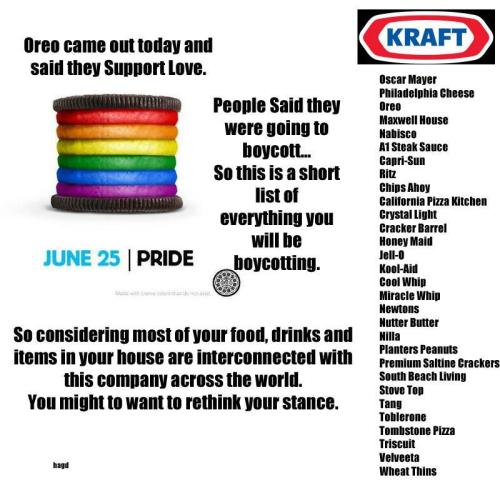
The stuffed biscuit remains one of the biggest brands on Facebook, with 30m likes and, with the opponents made to look foolish, Oreo (and gay rights) were the real winners this time around.
That Big Event in London
This pop-up brand began selling its ‘reality check’ souvenir tote bags and T-shirts online ahead of the London 2012 Olympic Games. The stg£15 merchandise bore subversive slogans like ‘They’re all on steroids’, ‘It only took me three hours to get to work this morning’ and ‘I’m renting my flat to a fat American family’, though the latter in particular attracted the ire of Team USA’s supporters on Facebook.

However, the negative comments did not detract from sales and stock was flying out, with designer Toby Leigh saying plenty of American tourists with a sense of humour were even picking them up.
Susan Boyle’s PR team
An unfortunate sequence of characters, or a marketing genius at work? That was the question when the hashtag selected to promote a listening party and Q&A for Susan Boyle’s new album was #susanalbumparty. Twitter investigator Is Twitter Wrong? discovered that the hashtag double entendre did indeed originate from the officialSusan Boyle Twitter account, but was later changed to #SusanBoyleAlbumParty.

While it’s likely the PR gurus regretted their original choice, we still think they’re winners having achieved wider reach than expected with the dodgy one.
Misses
McDonald’s
What began as a well-intentioned hashtag ended up as a ‘bashtag’ when Twitter users hijacked the McDonald’s #McDStories tag with horror stories from the fast-food chain. References in the tweets ranged from obesity and diabetes to fingernails discovered in fries. Even McDonald’s couldn’t put the genie back in the bottle and, even though the campaign was pulled, the bashtag continues to be used negatively.


Starbucks Ireland
The Starbucks Ireland Twitter account got a little carried away with Queen Elizabeth II’s Diamond Jubilee celebrations this year, apparently forgetting that Ireland is no longer a part of the Queen’s realm. A tweet asking followers what made them proud to be British provoked backlash and prompted an apology from the coffee makers.

NBC
During the 2012 Olympics, one of the biggest trending topics on Twitter was #NBCfail, owing to the US network’s decision to delay coverage of some events for prime-time viewing, even though there was little viewers could do to avoid hearing the results of every event on various social media channels in the interim. NBC even live tweeted the opening ceremony hours before they would broadcast it themselves. To add more fuel to the fire, the opening ceremony commentators showed their ignorance as country’s names were mispronounced and presenter Bob Costas tried desperately to find something relevant to say about nations he clearly knew very little about.

American Apparel, Gap, Urban Outfitters, CelebBoutique and Kenneth Cole
Piggybacking on a trending topic is a common social media marketing ploy, though that doesn’t mean all trending topics are fair game. Here we have just some of the year’s misguided brands that thought tragic and devastating events such as Hurricane Sandy, the Aurora shooting and the uprising in Egypt were fodder for their marketing messages.


Cinnamon
Cinnamon café in Ranelagh, Dublin, made the headlines this year for breaking the golden rule of interacting with customers on social media: don’t resort to name-calling.

That said, the Dublin 6 café did sweeten its apology with special discounts on coffee for customers that quoted ‘Twittergate’, retaining some semblance of class.
Celina
But it’s not just brands that need to learn when to hold their tongues on social media, as one Facebook user who decided to use this platform to voice a complaint to Treacy’s Hotel Waterford has learned. Unfortunately, it seems this lady had been misinformed about the events that transpired on her fiancé’s stag weekend. The entire exchange is wonderfully acted out by Final Boss Media below, but beware: NSFW language comes with.
Death by social media
And finally, we’ll take a moment to remember those that were mistakenly declared dead by social media users this year. Morgan Freeman is constantly falling victim to these hoaxes, and this year he was joined by Mick Jagger, Bill Cosby, Reese Witherspoon and Keanu Reeves – all of whom are alive and well, I assure you.
Worse still are the tweets from users following the death of a high-profile public figure, confusing the dearly departed with someone else. To clarify: Neil Armstrong, astronaut, died in August 2012; Billie Joe Armstrong, frontman of Green Day, is still going strong.

These are likely the same people that were surprised to find out that the Titanic was real.
Sunday, 30 September 2012
Finding fame, and sometimes fortune, in social media
Those who have become 'internet-famous' offer insights to the use of Twitter, Instagram or Tumblr for self-promotion.
Social media has made it easier than ever to catapult from obscurity to prominence. In recent years, the web has blossomed into a more egalitarian version of American Idol, where nobodies compete for attention alongside somebodies.
Today, a teenager posting webcam videos to YouTube can get a movie deal. (For example, Fred: The Movie.)
A 30-something posting one-liners on Twitter can land a TV show on CBS: $#*! My Dad Says. Bloggers creating internet memes are being offered book deals at a dizzying pace.
However, alongside breakout web celebs — not to mention actual celebrities with huge online followings such as Rihanna and Katy Perry — there's a new class of microstars who are highly popular and viral, but have no aspirations of going to Hollywood.
The mobile phone quipster
Mueller created his Twitter account, @itisjoey, in 2010 as he was travelling to compete at the World Horseshoe Tournament in Cedar Rapids, Iowa. He figured using Twitter to comment from a big event might help him draw an audience.
"I didn't get any followers or anything," he recalls. "I guess it wasn't interesting."
Mueller says his personal Tumblr website already had 75,000 followers. He added a link to his Twitter account. Immediately, his follower count jumped. Then a curious thing happened: the numbers kept climbing. In 2012, he hit 440,000.
I'm not sure why," he says. "Sometimes I think I got lucky."
Mueller says he has never purchased followers. He says that posting from noon to 6pm, when people typically spend more time online, helps. He also routinely adopts popular hashtags, especially political ones, which he says helped get him retweeted by organisations including Move On.
The fame hasn't gone to his head, he says, or at least his parents keep him down-to-earth. "They're like, 'You know, you're not really famous. Stay in school."'
The tattoo chronicles
Kimber Turner was bored. In the spring of 2008, when she was a 22-year-old journalism major at Middle Tennessee State University in Murfreesboro, Turner completed all of her courses online. Which is to say, she spent a lot of time on her laptop.
Turner started killing time online by collecting found images of tattoos borrowed mostly from body modification websites. She decided to post the photos on a Tumblr account she hastily titled with an obscenity common among youthful creators of Tumblrs — personalised web pages where ephemera is deposited. In a few months, Turner had 300 followers. Other Tumblr users began emailing pictures and explanations of their own tattoos to her.
"Everybody wanted their story out there," Turner says. "People just really liked how interactive it was."
She said in 2008 she received 200 submissions a day. Four years later, she gets 350 a day. Images are contributed by fans all over the globe.
Today, Turner has more than 695,000 followers. For comparison, when Texts from Hillary went viral on Tumblr earlier this year, it attracted 45,000 followers in a week.
Her secret? Volume. She publishes about 50 photos a day, one every 30 minutes, to keep fans coming back. She also follows Tumblr's other popular users
"There's so many people on Tumblr who post all sorts of random things," Turner says. "Having a focus really lets people connect, and it's a great way to stand out."
Although she took various odd jobs after graduating in 2011, including one as a receptionist for a seamstress, ads on the site earn her $60,000 annually, she says.
"When I realised it could very well just be a full-time job, I nearly had a heart attack," she says. "Now I make more than my parents."
The hyperlocal radio DJ
Jaime Black, 29, says he has been a "huge radio nerd" since he was 15. He cut his teeth at an alternative rock station, Q101 in Chicago, where he graduated from an internship to a weekend producing job.
On the side, in 2005, he began podcasts about Chicago's underground music scene. Called Dynasty Podcasts, the episodes — 10 to 15-minute interviews Black records with local artists and club owners — were made available as MP3s on his website. The response was modest.
Five years later, when he created a SoundCloud account, he saw just how broad his reach could grow. He has amassed more than 43,000 followers on the audio-sharing website, which has been called the "YouTube of audio".
"I was very fortunate to get there early," Black says of SoundCloud, which claims to have 20 million users. "I might have beat some of the larger radio stations to SoundCloud. I didn't see that much non-music content when I started."
Today, Black posts two to 11 shows a week, which he records with a hand-held Olympus digital recorder. His philosophy is, "make it easy for people to discover the content and know right away what it is".
"I'm sharing it on Instagram, Twitter, Tumblr, Pinterest," he says. "I don't just post things without putting some effort into the presentation. All the imaging is uniform. All the metadata is uniform."
In 2011, Black started running local event promotions, just like a radio station. He turned Dynasty Podcasts into a full-time job and said he earned $500 for one hour of work.
"A few years ago it was like, 'Oh, how cute, you have a pretend radio show,' " Black says. "And now, we just did a promotion with Supercuts."
The metropolitan paparazzo
Whenever a new digital service is started, there is a race to claim user names. In January 2011, Liz Eswein, then a senior at New York University, claimed one of the better Instagram user names: @newyorkcity.
"People have said, 'Oh, I thought the city of New York was running it.' " Eswein laughs. "It's like, nope, it's just me."
It is difficult to tell that the feed is not maintained by someone in the mayor's office. Eswein, 23, posts only photos taken in and around the city. Using her iPhone 4S, she sticks to snapshots of familiar landmarks like the Statue of Liberty and Central Park, and pictures taken at local events such as the US Open and New York Fashion Week. One of Eswein's recent snapshots of the Plaza Hotel earned 13,330 likes.
She says she often sees comments from users across the United States and as distant as Australia, South America and Greece.
"Instagram is a great way to see different parts of the world through your phone," she says, "Everyone has a special place in their heart for New York City."
Soon after starting the account, Eswein began attending local Instawalks, where users gather to socialise and take photos. The gatherings publicised her account among the app's power users.
By April 2012, @newyorkcity had 195,000 followers. It jumped to 422,000 after the release of an Instagram app for Android phones. (For some perspective, Lady Gaga's account currently has about 440,000 followers.)
In March, Eswein founded a business with two Instagram users. They now consult with brands, including Evian and Samsung, that are looking to engage users on Instagram.
Does she also keep a personal account on Instagram? "Yeah, but I don't use it at all," she said.
Social media has made it easier than ever to catapult from obscurity to prominence. In recent years, the web has blossomed into a more egalitarian version of American Idol, where nobodies compete for attention alongside somebodies.
Today, a teenager posting webcam videos to YouTube can get a movie deal. (For example, Fred: The Movie.)
A 30-something posting one-liners on Twitter can land a TV show on CBS: $#*! My Dad Says. Bloggers creating internet memes are being offered book deals at a dizzying pace.
However, alongside breakout web celebs — not to mention actual celebrities with huge online followings such as Rihanna and Katy Perry — there's a new class of microstars who are highly popular and viral, but have no aspirations of going to Hollywood.
How they became internet-famous — and made comfortable incomes — offers insights to those who are unsure of how to use Twitter, Instagram or Tumblr to promote themselves or their projects.
The mobile phone quipster
Tattoo photos and stories posted by Kimber Turner on Tumblr.
Like many teenagers, Joey Mueller, 19, spends much of his time texting on his iPhone. But when he taps out a 140-character message and presses send, he's talking to nearly 400,000 people.Mueller created his Twitter account, @itisjoey, in 2010 as he was travelling to compete at the World Horseshoe Tournament in Cedar Rapids, Iowa. He figured using Twitter to comment from a big event might help him draw an audience.
"I didn't get any followers or anything," he recalls. "I guess it wasn't interesting."
Joey Mueller, aka @itisjoey. Photo: Twitter
Now a sophomore majoring in graphic design at the University of Minnesota, he decided to avoid personal messages and focus on observational humour.Mueller says his personal Tumblr website already had 75,000 followers. He added a link to his Twitter account. Immediately, his follower count jumped. Then a curious thing happened: the numbers kept climbing. In 2012, he hit 440,000.
I'm not sure why," he says. "Sometimes I think I got lucky."
Mueller says he has never purchased followers. He says that posting from noon to 6pm, when people typically spend more time online, helps. He also routinely adopts popular hashtags, especially political ones, which he says helped get him retweeted by organisations including Move On.
The fame hasn't gone to his head, he says, or at least his parents keep him down-to-earth. "They're like, 'You know, you're not really famous. Stay in school."'
The tattoo chronicles
Kimber Turner was bored. In the spring of 2008, when she was a 22-year-old journalism major at Middle Tennessee State University in Murfreesboro, Turner completed all of her courses online. Which is to say, she spent a lot of time on her laptop.
Turner started killing time online by collecting found images of tattoos borrowed mostly from body modification websites. She decided to post the photos on a Tumblr account she hastily titled with an obscenity common among youthful creators of Tumblrs — personalised web pages where ephemera is deposited. In a few months, Turner had 300 followers. Other Tumblr users began emailing pictures and explanations of their own tattoos to her.
"Everybody wanted their story out there," Turner says. "People just really liked how interactive it was."
She said in 2008 she received 200 submissions a day. Four years later, she gets 350 a day. Images are contributed by fans all over the globe.
Today, Turner has more than 695,000 followers. For comparison, when Texts from Hillary went viral on Tumblr earlier this year, it attracted 45,000 followers in a week.
Her secret? Volume. She publishes about 50 photos a day, one every 30 minutes, to keep fans coming back. She also follows Tumblr's other popular users
"There's so many people on Tumblr who post all sorts of random things," Turner says. "Having a focus really lets people connect, and it's a great way to stand out."
Although she took various odd jobs after graduating in 2011, including one as a receptionist for a seamstress, ads on the site earn her $60,000 annually, she says.
"When I realised it could very well just be a full-time job, I nearly had a heart attack," she says. "Now I make more than my parents."
The hyperlocal radio DJ
Jaime Black, 29, says he has been a "huge radio nerd" since he was 15. He cut his teeth at an alternative rock station, Q101 in Chicago, where he graduated from an internship to a weekend producing job.
On the side, in 2005, he began podcasts about Chicago's underground music scene. Called Dynasty Podcasts, the episodes — 10 to 15-minute interviews Black records with local artists and club owners — were made available as MP3s on his website. The response was modest.
Five years later, when he created a SoundCloud account, he saw just how broad his reach could grow. He has amassed more than 43,000 followers on the audio-sharing website, which has been called the "YouTube of audio".
"I was very fortunate to get there early," Black says of SoundCloud, which claims to have 20 million users. "I might have beat some of the larger radio stations to SoundCloud. I didn't see that much non-music content when I started."
Today, Black posts two to 11 shows a week, which he records with a hand-held Olympus digital recorder. His philosophy is, "make it easy for people to discover the content and know right away what it is".
"I'm sharing it on Instagram, Twitter, Tumblr, Pinterest," he says. "I don't just post things without putting some effort into the presentation. All the imaging is uniform. All the metadata is uniform."
In 2011, Black started running local event promotions, just like a radio station. He turned Dynasty Podcasts into a full-time job and said he earned $500 for one hour of work.
"A few years ago it was like, 'Oh, how cute, you have a pretend radio show,' " Black says. "And now, we just did a promotion with Supercuts."
The metropolitan paparazzo
Whenever a new digital service is started, there is a race to claim user names. In January 2011, Liz Eswein, then a senior at New York University, claimed one of the better Instagram user names: @newyorkcity.
"People have said, 'Oh, I thought the city of New York was running it.' " Eswein laughs. "It's like, nope, it's just me."
It is difficult to tell that the feed is not maintained by someone in the mayor's office. Eswein, 23, posts only photos taken in and around the city. Using her iPhone 4S, she sticks to snapshots of familiar landmarks like the Statue of Liberty and Central Park, and pictures taken at local events such as the US Open and New York Fashion Week. One of Eswein's recent snapshots of the Plaza Hotel earned 13,330 likes.
She says she often sees comments from users across the United States and as distant as Australia, South America and Greece.
"Instagram is a great way to see different parts of the world through your phone," she says, "Everyone has a special place in their heart for New York City."
Soon after starting the account, Eswein began attending local Instawalks, where users gather to socialise and take photos. The gatherings publicised her account among the app's power users.
By April 2012, @newyorkcity had 195,000 followers. It jumped to 422,000 after the release of an Instagram app for Android phones. (For some perspective, Lady Gaga's account currently has about 440,000 followers.)
In March, Eswein founded a business with two Instagram users. They now consult with brands, including Evian and Samsung, that are looking to engage users on Instagram.
Does she also keep a personal account on Instagram? "Yeah, but I don't use it at all," she said.
Tuesday, 18 September 2012
How To Develop a Successful Social Media Campaign
If you’re at the beginning of your social media journey, your first question should always be about success. Anyone can throw together a social media campaign, or a campaign that uses social media – but very few people can do it successfully. In order to create a social media campaign that works (i.e. that sells and promotes), you need to know where to begin. Courtesy of make1kadaywithimmacc.blogspot.com Here is the basic social media campaign formula:Establish Brand – Gather Community – Interact, Sell, Promote. It looks simple, but it isn’t. People have problems at each step of this basic 3 step process. If your brand identity is wrong, you won’t gain a community or sell stuff – for example. Here is the right process to use when establishing a successful social media campaign.
#1: Research Until You ScreamAll great marketing campaigns are based on effective research. Know your target demographic intimately, what they want, need and are dying to learn about. Research your ideal budget, and investigate how much setting up a campaign is going to cost you. Figure out your time investment. Outline the supporting campaigns that will help fuel your social media marketing campaign – like Google Adwords. Before you begin, learn where you stand, and what’s on the horizon.
#2: Preparing Your Master PlanWhat makes your business different? How can you attract your target demographic and keep them interested? What should your brand identity be, or your writing tone? Use the research you have to answer as many pertinent questions as possible. Your master plan needs to clearly define your goals. This means knowing what you want to achieve, and then outlining a realistic plan to achieve it. Remember – failing to plan, is planning to fail! The most direct route to success is preparation, planning and research.
#3: Creating and Maintaining Awesome Content. The key to a successful social media campaign is getting the research and planning right, and then following through with consistent content creation and interaction. People respond to good content – that’s what you want! But the most important thing of course is sustainability. You need to grow your community and get them to interact. Any way you look at it, the more juicy content the better.
#4: Learning, Adapting, MonitoringThe battle is not over when you have your social media pages up and running. You need to learn all the time from the results that you get with your campaign. Use monitoring tools to track your progress, and review your campaign at the end of every month. The best campaigns are always evolving. As you learn more through application, your social media campaign will get better – especially if you’re a stickler for data analysis. Focus on developing closer relationships with your current community and others will follow. Don’t pour your efforts into growing your community just because you want to ‘look’ like a popular business. Every business is different. Yours might be perfect for Facebook, so focus your efforts there. Start with the basics – Facebook, Twitter, LinkedIn, a blog and a Youtube channel. If you can only manage 1 properly, stick with that for awhile. In the end, when your community grows, they’ll be begging for more!

#1: Research Until You ScreamAll great marketing campaigns are based on effective research. Know your target demographic intimately, what they want, need and are dying to learn about. Research your ideal budget, and investigate how much setting up a campaign is going to cost you. Figure out your time investment. Outline the supporting campaigns that will help fuel your social media marketing campaign – like Google Adwords. Before you begin, learn where you stand, and what’s on the horizon.
#2: Preparing Your Master PlanWhat makes your business different? How can you attract your target demographic and keep them interested? What should your brand identity be, or your writing tone? Use the research you have to answer as many pertinent questions as possible. Your master plan needs to clearly define your goals. This means knowing what you want to achieve, and then outlining a realistic plan to achieve it. Remember – failing to plan, is planning to fail! The most direct route to success is preparation, planning and research.
#3: Creating and Maintaining Awesome Content. The key to a successful social media campaign is getting the research and planning right, and then following through with consistent content creation and interaction. People respond to good content – that’s what you want! But the most important thing of course is sustainability. You need to grow your community and get them to interact. Any way you look at it, the more juicy content the better.
#4: Learning, Adapting, MonitoringThe battle is not over when you have your social media pages up and running. You need to learn all the time from the results that you get with your campaign. Use monitoring tools to track your progress, and review your campaign at the end of every month. The best campaigns are always evolving. As you learn more through application, your social media campaign will get better – especially if you’re a stickler for data analysis. Focus on developing closer relationships with your current community and others will follow. Don’t pour your efforts into growing your community just because you want to ‘look’ like a popular business. Every business is different. Yours might be perfect for Facebook, so focus your efforts there. Start with the basics – Facebook, Twitter, LinkedIn, a blog and a Youtube channel. If you can only manage 1 properly, stick with that for awhile. In the end, when your community grows, they’ll be begging for more!
Wednesday, 5 September 2012
Facebook's and Twitter's Dirty Little Secret
Information recently revealed from a variety of sources suggests that a huge percentage of users on social sites like Facebookand Twitter aren’t actually human.Millions upon millions of
social accounts are either created by “bots” or have been created for some other
purpose than social networking.And I believe the problem is much worse than is being reported.
The Trouble With Facebook and Twitter
In a company filing earlier this month, Facebook reported that 83 million Facebook accounts are fake users. A social media management company called Status People created an online tool called Fakers,
which estimates the relative percentages of anyone’s Twitter following that’s fake, inactive and good.
For example, Twitter’s number-one user, Lady Gaga, supposedly has about 30 million followers. But Fakers says 71% of those little monsters are either fake or inactive. In reality, Twitter’s
number-one user has fewer than 9 million actual followers, if Fakers is accurate.
Personally, I doubt the real number of fake Facebook and Twitter accounts are actually that low. The reason is that in neither case are the methodologies used to reach these numbers transparent. And I think it’s nearly impossible to detect a well-managed fake account.
I’m certain that I could create a fake Facebook or Twitter account, visit it weekly for ten minutes of activity, and no bot or machine or survey could ever determine that it’s a fake account.
In former Defense Secretary Donald Rumsfeld’s lingo, detection software can identify only the “known unknowns” and is clueless and powerless in the face of the “unknown unknowns.”
I think the percentages listed above are minimums, and that actual percentages of fake accounts is much higher.
The Fake User Industrial Complex
Where do fake user accounts come from? They come from many sources and serve many purposes. Here are some of the major sources for fake user accounts.
Fake user market: At least 58 companies currently appear online to sell fake users. Pay one of these services less than $20, and your Twitter following will go up by 1,000 users in 24 hours. A million new fake followers will cost you more than $1,300 and take a few days. You can also buy followers for Facebook, YouTube, Instagram and others.
Spammers: People hoping to sell something also create fake user accounts in large numbers.
Trolls: Most online trolls have multiple fake accounts, which they use to mess with people.
Astroturfers: Anyone who wants to fake a grass-roots
campaign of some kind can higher low-cost workers to create very large numbers
of fake accounts, which they can then use to leave opinion comments, creating
the illusion that an idea is more popular than it appears. Many politicians in the US and
in other democracies are almost certainly doing this, too. For example, Barracuda Labs reported
that within a period of 24 hours during the month of June, the Twitter followers
of presidential candidate Mitt Romney grew by 116,992. Here’s the kicker: One
quarter of those “users” had joined Twitter within the prior four days.
Regular people with multiple accounts: Some “fake” accounts are merely created for a variety of purposes. I personally have created about a dozen Twitter accounts over the years for various projects. I never closed any of them.
Abandoned accounts: A huge number of social media
accounts are created, then abandoned. They’re not “fake” users, but nobody’s
home. A user is only a user if he uses.
Developers: Developers often create multiple fake
social media accounts so they can test an app or some other project.
Criminals: Identity thieves, drug dealers, terrorists -- you name it. It’s not very smart to coordinate or execute various law-breaking activities from a real social media account. It’s easy enough to just create a new fake one, and use that from a public terminal.
Social Network Founders: Reddit founder Steve Huffman admitted in an online computer science class that Reddit was launched with a large number of fake users. The two founders wrote a capability available only to them
whereby adding a user name automatically registered that username as a real
user. For the first few months, Reddit appeared to have hundreds or thousands of users, but they were mostly just the two founders. This is probably pretty common, especially for apps that interface with social networks (as many now do).
The Fake 'Like' Industry
BBC reporter Rory Cellan-Jones tested the
value to businesses of Facebook advertising and “Likes.” He created a fake company called VirtualBagel, which offered a bogus service: downloadable electronic bagels.
He bought $60 worth of Facebook advertising, and got 3,000 “Likes.”
Upon closer inspection, however, he found that many of the “Likes” were made by fake accounts, and by serial “Likers” -- for example, one fake account in Egypt that had also “Liked” 3,000 other brands.
He also noticed a wildly disproportionate number of “Likes” coming from certain countries -- Egypt, Indonesia and the Philippines. A bioscience consulting company called Comprendia discovered something similar. Some 54% of “Likes” for their a company came from India,
Mexico, Indonesia, and Portugal, which collectively represent only 15% of
Facebook users. They estimate that about 40% of the Facebook “Likes” they got
were from fake accounts. Facebook recently announced
a new initiative to automatically remove fake “Likes,” which it says come from
“malware, compromised accounts, deceived users, or purchased bulk likes.”
But this program appears to me to be more of a PR stunt than an effective elimination of fake “Likes.” For starters, Facebook estimates that “on average, less than 1% of Likes on any
given Page will be removed.” However, the actual percentage of fake “Likes” is
surely much higher, possibly as high as 40%, as Comprendia estimates.
The Fake User Problem
I believe the fake social user
account problem is going to become a far bigger challenge than most people believe.
It’s an arms race, comparable to the contest between email spammers and spam filter companies. As companies find new ways to detect and close fake accounts, the fakers will find new ways
to open undetectable ones.Fake accounts will increasingly
sway public opinion, spam social streams with sophisticated and hard-to-detect
soft pitches for products and services, socially engineer people for criminal
purposes and much more. The fake social user account
problem will be devastating for Facebook and Twitter, which will have to work
hard to convince advertisers that users and “Likes” and tweets are living,
breathing human beings, and not bots or scammers.
social accounts are either created by “bots” or have been created for some other
purpose than social networking.And I believe the problem is much worse than is being reported.
The Trouble With Facebook and Twitter
In a company filing earlier this month, Facebook reported that 83 million Facebook accounts are fake users. A social media management company called Status People created an online tool called Fakers,
which estimates the relative percentages of anyone’s Twitter following that’s fake, inactive and good.
For example, Twitter’s number-one user, Lady Gaga, supposedly has about 30 million followers. But Fakers says 71% of those little monsters are either fake or inactive. In reality, Twitter’s
number-one user has fewer than 9 million actual followers, if Fakers is accurate.
Personally, I doubt the real number of fake Facebook and Twitter accounts are actually that low. The reason is that in neither case are the methodologies used to reach these numbers transparent. And I think it’s nearly impossible to detect a well-managed fake account.
I’m certain that I could create a fake Facebook or Twitter account, visit it weekly for ten minutes of activity, and no bot or machine or survey could ever determine that it’s a fake account.
In former Defense Secretary Donald Rumsfeld’s lingo, detection software can identify only the “known unknowns” and is clueless and powerless in the face of the “unknown unknowns.”
I think the percentages listed above are minimums, and that actual percentages of fake accounts is much higher.
The Fake User Industrial Complex
Where do fake user accounts come from? They come from many sources and serve many purposes. Here are some of the major sources for fake user accounts.
Fake user market: At least 58 companies currently appear online to sell fake users. Pay one of these services less than $20, and your Twitter following will go up by 1,000 users in 24 hours. A million new fake followers will cost you more than $1,300 and take a few days. You can also buy followers for Facebook, YouTube, Instagram and others.
Spammers: People hoping to sell something also create fake user accounts in large numbers.
Trolls: Most online trolls have multiple fake accounts, which they use to mess with people.
Astroturfers: Anyone who wants to fake a grass-roots
campaign of some kind can higher low-cost workers to create very large numbers
of fake accounts, which they can then use to leave opinion comments, creating
the illusion that an idea is more popular than it appears. Many politicians in the US and
in other democracies are almost certainly doing this, too. For example, Barracuda Labs reported
that within a period of 24 hours during the month of June, the Twitter followers
of presidential candidate Mitt Romney grew by 116,992. Here’s the kicker: One
quarter of those “users” had joined Twitter within the prior four days.
Regular people with multiple accounts: Some “fake” accounts are merely created for a variety of purposes. I personally have created about a dozen Twitter accounts over the years for various projects. I never closed any of them.
Abandoned accounts: A huge number of social media
accounts are created, then abandoned. They’re not “fake” users, but nobody’s
home. A user is only a user if he uses.
Developers: Developers often create multiple fake
social media accounts so they can test an app or some other project.
Criminals: Identity thieves, drug dealers, terrorists -- you name it. It’s not very smart to coordinate or execute various law-breaking activities from a real social media account. It’s easy enough to just create a new fake one, and use that from a public terminal.
Social Network Founders: Reddit founder Steve Huffman admitted in an online computer science class that Reddit was launched with a large number of fake users. The two founders wrote a capability available only to them
whereby adding a user name automatically registered that username as a real
user. For the first few months, Reddit appeared to have hundreds or thousands of users, but they were mostly just the two founders. This is probably pretty common, especially for apps that interface with social networks (as many now do).
The Fake 'Like' Industry
BBC reporter Rory Cellan-Jones tested the
value to businesses of Facebook advertising and “Likes.” He created a fake company called VirtualBagel, which offered a bogus service: downloadable electronic bagels.
He bought $60 worth of Facebook advertising, and got 3,000 “Likes.”
Upon closer inspection, however, he found that many of the “Likes” were made by fake accounts, and by serial “Likers” -- for example, one fake account in Egypt that had also “Liked” 3,000 other brands.
He also noticed a wildly disproportionate number of “Likes” coming from certain countries -- Egypt, Indonesia and the Philippines. A bioscience consulting company called Comprendia discovered something similar. Some 54% of “Likes” for their a company came from India,
Mexico, Indonesia, and Portugal, which collectively represent only 15% of
Facebook users. They estimate that about 40% of the Facebook “Likes” they got
were from fake accounts. Facebook recently announced
a new initiative to automatically remove fake “Likes,” which it says come from
“malware, compromised accounts, deceived users, or purchased bulk likes.”
But this program appears to me to be more of a PR stunt than an effective elimination of fake “Likes.” For starters, Facebook estimates that “on average, less than 1% of Likes on any
given Page will be removed.” However, the actual percentage of fake “Likes” is
surely much higher, possibly as high as 40%, as Comprendia estimates.
The Fake User Problem
I believe the fake social user
account problem is going to become a far bigger challenge than most people believe.
It’s an arms race, comparable to the contest between email spammers and spam filter companies. As companies find new ways to detect and close fake accounts, the fakers will find new ways
to open undetectable ones.Fake accounts will increasingly
sway public opinion, spam social streams with sophisticated and hard-to-detect
soft pitches for products and services, socially engineer people for criminal
purposes and much more. The fake social user account
problem will be devastating for Facebook and Twitter, which will have to work
hard to convince advertisers that users and “Likes” and tweets are living,
breathing human beings, and not bots or scammers.
Monday, 13 August 2012
Social media could turn athlete earnings gold
Olympic athletes are returning home from the London Games, hoping to extend their peak period for endorsement earnings through their increased popularity on social media.Many athletes saw their earnings potential skyrocket during the Games, even existing household names such as Michael Phelps, the US swimmer crowned as the most winning Olympian of all time, and Usain Bolt, the fastest man in the world.The athletes, who both are endorsed by a lineup of global brands, could earn about $50m a year in endorsement deals should they be able to extend their time in the spotlight beyond the halo of the Games, according to SponsorHub, a company that brokers endorsement deals.An athlete’s following on Twitter, Facebook and other social media sites has quickly become key in determining this.“Brands always ask how many followers an athlete has,” said Ricky Simms, director at Pace Sports Management who is Bolt’s worldwide agent. “For many companies, this is the way they want to reach their target customers.”Olympic athletes traditionally had a short time frame to capitalise on their performance in the Games because they quickly fade from the public eye, according to marketing executives. But social media has allowed the athletes to extend relationships with fans by sharing messages, photos and videos. Sponsorship now typically involve some social media promotion through an athlete’s Twitter feed or Facebook page. Before the Games, for instance, Bolt posted messages about his sponsors, such as a picture of a refrigerator filled with bottles of the orange Gatorade sports drink Athletes were not permitted to mention sponsors on social media without a special waiver until a period surrounding the Games, which ends on Wednesday. Advertisers that endorsed Olympians but were not official Olympic sponsors also were barred from promoting that connection during the period surrounding the Games. Marketers that endorse Olympic athletes are expected to release a flurry of ads to congratulate athletes when that blackout period ends. Athletes also are expected to hit social media, thanking their sponsors. Bolt is one of the most followed Olympians with more than 8m Facebook fans and 1.6m Twitter followers. Before the games, Bolt had about 620,000 Twitter followers. Bolt’s existing sponsors include Visa, Puma and Gatorade but he is looking to extend his brand further. Mr Simms said Bolt had recently released a new mobile game and is in discussions about using his signature celebratory pose on products ranging from luxury brands to toiletry items and Jamaican-inspired food products.However, some athletes who experienced a quick leap to fame during the Games are likely to have a harder time translating that into new sponsorship deals. Gabby Douglas, the US gold medal winning gymnast, for instance, saw her Twitter followers spike to more than 654,000 from 29,000 before the Games. While she now ranks among the most sponsorable athletes, her appeal to marketers is likely to drop relatively quickly after the Games because of the short tenure of most gymnasts and a lack of interest in gymnastics throughout the rest of the year, industry executives said.Marketers that endorsed her before the games, such as Procter & Gamble, are likely to see the most benefit.“There is no arguing that Gabby’s value as an endorser is exponentially more valuable now than it was when they signed her,” said Kevin Adler, founder of Engage Marketing, a Chicago sports and entertainment marketing company. “If I am a creative and smart athlete agent, I would include bonus clauses that trigger financial incentives if social media audiences grow.”
Sunday, 29 July 2012
Most Common Mistakes Made on Social Media
If we’ve said it once, we’ve said it 100 times… Social Media Works! (But only when used correctly.) There are many things you can do to reverse the effectiveness of your social media efforts. Today, we will go over a few of those things.
Over Posting/Over Tweeting
There was a particular musical group I was following on Twitter for a while, one morning, they tweeted over 30 times in 30 minutes (more than once a minute). I “unfollowed” them and have never checked out their Twitter feed again. Now, while this might be a bit of an excessive story, the point is: don’t be obnoxious.Some basic guidelines to follow for this (keep in mind that there are rare instances where guidelines need to be broken): 1. Don’t post more than once an hour.
2. Don’t post more than 3 times in a day. (Try to keep it to once in the morning and once in the afternoon, if you can.)
Who Cares?
Don’t talk just to hear the sound of your own voice. In other words, don’t tell your followers and fans things they don’t care about. Make sure when you’re posting it’s something relevant. And never be afraid to ask your followers/fans what they want to hear about!
The Hard Sell
Your social media should primarily be used to connect with customers and potential customers. By doing this, we obviously hope that you will generate more loyal as well as new customers. But would you like to know a good way to not generate more loyal and new customers using social media? Constantly try to sell them on your product! Tell them every day to buy your product because it’s the best. You’ll lose followers/fans faster than you can say “Buy my product.” Now, pictures, fantastic. Informing them about your product, that’s fine. Letting them know when you are running a special, they’d love that! Just do it in a way that’s not an in-your-face sales pitch. They don’t want to hear it.
Preventing Interaction
I went to a page a couple of weeks ago to post something and realized they had the page set so that fans could not post. In our eyes, that basically defeats the purpose. Social media is about interaction. While there are times censor your page, it’s typically good to see the feedback, both good and bad.
So, there you have it! Some of the most common mistakes made on social media! Unfortunately, that doesn’t even begin to cover them all. We didn’t even get into… having the wrong type of page (This needs to be it’s own blog in order to cover everything that needs to be covered) Not giving enough variety in your posts, not encouraging interaction, and so many others.
Over Posting/Over Tweeting
There was a particular musical group I was following on Twitter for a while, one morning, they tweeted over 30 times in 30 minutes (more than once a minute). I “unfollowed” them and have never checked out their Twitter feed again. Now, while this might be a bit of an excessive story, the point is: don’t be obnoxious.Some basic guidelines to follow for this (keep in mind that there are rare instances where guidelines need to be broken): 1. Don’t post more than once an hour.
2. Don’t post more than 3 times in a day. (Try to keep it to once in the morning and once in the afternoon, if you can.)
Who Cares?
Don’t talk just to hear the sound of your own voice. In other words, don’t tell your followers and fans things they don’t care about. Make sure when you’re posting it’s something relevant. And never be afraid to ask your followers/fans what they want to hear about!
The Hard Sell
Your social media should primarily be used to connect with customers and potential customers. By doing this, we obviously hope that you will generate more loyal as well as new customers. But would you like to know a good way to not generate more loyal and new customers using social media? Constantly try to sell them on your product! Tell them every day to buy your product because it’s the best. You’ll lose followers/fans faster than you can say “Buy my product.” Now, pictures, fantastic. Informing them about your product, that’s fine. Letting them know when you are running a special, they’d love that! Just do it in a way that’s not an in-your-face sales pitch. They don’t want to hear it.
Preventing Interaction
I went to a page a couple of weeks ago to post something and realized they had the page set so that fans could not post. In our eyes, that basically defeats the purpose. Social media is about interaction. While there are times censor your page, it’s typically good to see the feedback, both good and bad.
So, there you have it! Some of the most common mistakes made on social media! Unfortunately, that doesn’t even begin to cover them all. We didn’t even get into… having the wrong type of page (This needs to be it’s own blog in order to cover everything that needs to be covered) Not giving enough variety in your posts, not encouraging interaction, and so many others.
Sunday, 8 July 2012
Facebook and Twitter feed anxiety
A poll of those using the technology found more than half of those surveyed said the sites had changed their behaviour - and half of those said their lives had been altered for the worse.Most commonly, those who suffered a negative impact from social media said their confidence fell after comparing their own achievements to those of friends online. Two-thirds said they found it hard to relax completely or to sleep after spending time on the sites.And one quarter of those polled said they had been left facing difficulties in their relationships or workplace after becoming confrontational online.In total, 298 people were polled by Salford Business School at the University of Salford, for the charity Anxiety UK. Of those, 53 per cent said the launch of social networking sites had changed their behaviour - and of those, 51 per cent said the impact had been negative.
The research also demonstrated the addictive powers of internet, with 55 per cent of people saying they felt "worried or uncomfortable" when they could not access their Facebook or email accounts. More than 60 per cent of people said they felt compelled to turn off electronic gadgets in order to have a break, with one in three of those surveyed saying they switched the devices off several times each day.The findings about behaviour changes after using social networking sites came from smaller in-depth research which was then carried out by Anxiety UK.Nicky Lidbetter, the charity's chief executive said: "If you are predisposed to anxiety it seems that the pressures from technology act as a tipping point, making people feel more insecure and more overwhelmed."She said the charity was surprised by the high proportion of people who found that the only way to ensure a break from the demands of their devices was to switch them off, as they were not capable of simply ignoring their mobile phones, BlackBerry devices and computers.Dr Linda Blair, a clinical psychologist said many people suffered increased anxiety because they failed to take charge of the demands being placed on them. She said: "I think one of the key things is that people have begun to behave as though technology is in control of them, instead of the other way round. We can switch the gadgets off but a lot of us have forgotten how to".Last year, a global study found that turning off mobile phones, avoiding the internet and tuning out of the television and radio can leave people suffering from symptoms similar to those seen in drug addicts trying to go "cold turkey". Scientists asked volunteers from 12 universities around the world to stay away from computers, mobile phones, iPods, television and radio for 24 hours. They found that the participants began to develop symptoms typically seen in smokers attempting to give up. The majority of those who enrolled in the study failed to last the full 24 hours without demanding their gadgets back.
The research also demonstrated the addictive powers of internet, with 55 per cent of people saying they felt "worried or uncomfortable" when they could not access their Facebook or email accounts. More than 60 per cent of people said they felt compelled to turn off electronic gadgets in order to have a break, with one in three of those surveyed saying they switched the devices off several times each day.The findings about behaviour changes after using social networking sites came from smaller in-depth research which was then carried out by Anxiety UK.Nicky Lidbetter, the charity's chief executive said: "If you are predisposed to anxiety it seems that the pressures from technology act as a tipping point, making people feel more insecure and more overwhelmed."She said the charity was surprised by the high proportion of people who found that the only way to ensure a break from the demands of their devices was to switch them off, as they were not capable of simply ignoring their mobile phones, BlackBerry devices and computers.Dr Linda Blair, a clinical psychologist said many people suffered increased anxiety because they failed to take charge of the demands being placed on them. She said: "I think one of the key things is that people have begun to behave as though technology is in control of them, instead of the other way round. We can switch the gadgets off but a lot of us have forgotten how to".Last year, a global study found that turning off mobile phones, avoiding the internet and tuning out of the television and radio can leave people suffering from symptoms similar to those seen in drug addicts trying to go "cold turkey". Scientists asked volunteers from 12 universities around the world to stay away from computers, mobile phones, iPods, television and radio for 24 hours. They found that the participants began to develop symptoms typically seen in smokers attempting to give up. The majority of those who enrolled in the study failed to last the full 24 hours without demanding their gadgets back.
Wednesday, 4 July 2012
7 Social Media Strategies for Small Business Owners
Investing in free social media tools is one of the most cost-effective things a small business owner can do to increase brand recognition and awareness, and yet fewer than 20% of SMBs currently have websites that link to popular social media networks like Facebook and Twitter. Why the disconnect? A 2011 survey by Hiscox, a small business insurance agency, found that 24% of SMB owners say they don’t have time to participate in social media marketing, while 14% say they don’t even know where to begin. Here are seven tips from experts in the social media marketing industry about how business owners can take advantage of the social media tools available today.1. Start measuring immediately. It’s important for small businesses to know how they’re doing when it comes to social media — including which tweets are getting the most re-tweets, which Facebook posts are getting the most ‘likes’, and which Tumblr posts are getting the most reblogs. By choosing some metrics that are important and keeping track of those measurements early on, businesses can generate benchmarks that they can look back at to see how they’re faring over time.
2. Timing is everything. When it comes to social media strategy, business owners should make sure they are tapping into the right channels during the optimal time of day. For example, restaurants may benefit from tweeting specials during lunchtime. The best days to send messages are on Tuesdays, Wednesdays, and Thursdays, since Monday is a catch-up day and Friday is too close to the weekend. Also, businesses will get the most traffic by scheduling their messages according to Eastern Standard Time.
3. Use the right platforms. Each social media site has its own particular quirks, and the messages that work on one site won’t necessary work on another. Photos are great on Facebook, Tumblr, and Instagram, but they don’t have the same impact when posted on Twitter. Business owners should experiment to learn which types of content work best on which platforms, and then do more of whatever produces the greatest results.
4. Treat social media as a two-way street. Social media networks like Facebook and Twitter aren’t just a one-way street. Business owners should ideally be writing posts and responding to customers regularly, both as a way to keep customers engaged and to promote social sharing. Industry estimates show that most people have an average of 250 friends on Facebook. Businesses can tap into that network for free when they engage customers in conversations about their products online.
5. Offer exclusive deals and discounts. One of the main reasons why customers follow their favorite brands online is to get access to special deals and offers. Businesses that share special promotions, social-specific deals, and exclusive content on their social media pages are not only giving customers a reason to follow their companies, but also providing an avenue to generate sales via social media.
6. Get smart about check-in sites. Check-in sites like Foursquare provide an excellent opportunity for cross promotion. Businesses can tweet at customers checking-in to thank them for visiting, and then ask those customers to leave their feedback on sites like Google Places and Yelp. Foursquare is also a great place for customer acquisition, since businesses can actively reach out to people checking-in at competing establishments with special offers or deals meant to bring those people in.
7. Integrate social media into other business systems. Social media doesn’t exist in a vacuum. By integrating social channels with existing systems like Google Analytics and Omniture, and using a social media management system, companies can connect the dots and see the role social media is playing in their overall marketing efforts. Business owners should track the traffic that social media networks are driving to their websites and find out whether social media is converting certain activities into pre-defined goals, like sales or customer acquisition.
2. Timing is everything. When it comes to social media strategy, business owners should make sure they are tapping into the right channels during the optimal time of day. For example, restaurants may benefit from tweeting specials during lunchtime. The best days to send messages are on Tuesdays, Wednesdays, and Thursdays, since Monday is a catch-up day and Friday is too close to the weekend. Also, businesses will get the most traffic by scheduling their messages according to Eastern Standard Time.
3. Use the right platforms. Each social media site has its own particular quirks, and the messages that work on one site won’t necessary work on another. Photos are great on Facebook, Tumblr, and Instagram, but they don’t have the same impact when posted on Twitter. Business owners should experiment to learn which types of content work best on which platforms, and then do more of whatever produces the greatest results.
4. Treat social media as a two-way street. Social media networks like Facebook and Twitter aren’t just a one-way street. Business owners should ideally be writing posts and responding to customers regularly, both as a way to keep customers engaged and to promote social sharing. Industry estimates show that most people have an average of 250 friends on Facebook. Businesses can tap into that network for free when they engage customers in conversations about their products online.
5. Offer exclusive deals and discounts. One of the main reasons why customers follow their favorite brands online is to get access to special deals and offers. Businesses that share special promotions, social-specific deals, and exclusive content on their social media pages are not only giving customers a reason to follow their companies, but also providing an avenue to generate sales via social media.
6. Get smart about check-in sites. Check-in sites like Foursquare provide an excellent opportunity for cross promotion. Businesses can tweet at customers checking-in to thank them for visiting, and then ask those customers to leave their feedback on sites like Google Places and Yelp. Foursquare is also a great place for customer acquisition, since businesses can actively reach out to people checking-in at competing establishments with special offers or deals meant to bring those people in.
7. Integrate social media into other business systems. Social media doesn’t exist in a vacuum. By integrating social channels with existing systems like Google Analytics and Omniture, and using a social media management system, companies can connect the dots and see the role social media is playing in their overall marketing efforts. Business owners should track the traffic that social media networks are driving to their websites and find out whether social media is converting certain activities into pre-defined goals, like sales or customer acquisition.
Friday, 29 June 2012
Social media and the value of friendship marketing
The value of social media lies not in what your brand in saying, but in what
other people aresaying about your brand
No one really cares about your brand’s last status update. Your followers
probably didn’t read your Tweet.
At least, they weren’t that bothered until one of their friends
‘liked’ your status update and it appeared in their newsfeed. Or retweeted it
and sent it to their own followers’ streams. In other words, what you have to
say about your brand is often more valuable coming from someone else than from
you.
Mark Zuckerberg was quoted this week as saying that a trusted
referral is the ‘holy grail’ of advertising. It comes in the wake of a $10m
settlement for a lawsuit against Facebook’s right to feature user’s names to
endorse a brand you may have once liked or shared.
Despite a vociferous privacy backlash, these ‘sponsored
stories’ are up to three times more effective than a standard Facebook ad,
according to Facebook chief operating officer Sheryl Sandberg.
Once, word-of-mouth meant a casual mention over a coffee or an
impassioned blog post. These days it’s an inadvertent affiliation of a name with
a brand – achieved via a simple click of a ‘like’ button, a comment, or a
re-Tweet.
As the Facebook settlement has shown, social media users have
proved that they can’t be duped into having their name exploited for commercial
purposes. They want – and deserve – the right to control how their name is used.
So, how do you get people naturally talking about your brand
and sharing on your behalf?
It’s all about content. If you’re posting about a great offer
or something funny that happened at your office summer party, chances are you’re
not going to get much engagement from fans. Nor is social media a sales channel
purely for pushing products.
Instead, find and create content that your audience will find
interesting, novel or funny (depending on your brand’s values) and are therefore
more like to share. Innocent Drinks is a pro at this, posting frivolous and
occasionally outlandish content that is novel enough to disrupt the banality of
their fans’ newsfeeds. (Recently they ran a sequence of comic-book style posts
in which the next frame of a story was determined by comments on the previous.
Fans were even working Innocent products into their answers.) It works, because
that’s who Innocent is: frivolous and occasionally outlandish.
Social media 101 presumes you already know what people are
saying about your brand from a customer service perspective. But to gain your
audience’s trust and to make them more likely to talk about your brand in
general, you need to know what they’re saying about everything else. What does
your audience like? What are they doing when they’re not ‘liking’ your status
update? Join conversations that people are already having.
This does not mean you should jump on every bandwagon and
start hijacking hashtags. Be selective, be appropriate. If you’re in travel, are
you watching and commenting throughout the right travel shows? If you have an
affiliation with sport, are you Tweeting throughout a game?
Social media, like friendship, is a two-way deal. Half a
social media manager’s job is listening: your home feed is one of your most
important tools. And if people feel like you get them, they will vocalise
that.
Another way to encourage people to share is to start
conversations that people want to be involved in. Create conversations that
people want to contribute to and it’s likely that their friends want to join in
too. Ask questions, elicit opinions.
‘How is everybody doing today?’ is not a conversation starter.
‘Marmite crepes?’ is.
Not only is this a great way to build your brand’s visibility,
but it’s also a tool to get to know your audience. Never before have marketers
had such an open forum of opinions and questions. Take advantage of this; you’ll
get more honest answers than any focus group. And you don’t even need to provide
sandwiches.
Lastly, it’s important to remember that your audience is
likely to be more socially savvy than you are – they have the power to control
conversations and express their thoughts – good and bad – to an unquantifiable
crowd. And they have a secret weapon – they’re probably in bed with your
competitors too.
In this sense, you need to exercise respect. Social media has
changed the brand-customer dynamic: remember, they’re no longer your customers.
They’re your friends.
other people aresaying about your brand
No one really cares about your brand’s last status update. Your followers
probably didn’t read your Tweet.
At least, they weren’t that bothered until one of their friends
‘liked’ your status update and it appeared in their newsfeed. Or retweeted it
and sent it to their own followers’ streams. In other words, what you have to
say about your brand is often more valuable coming from someone else than from
you.
Mark Zuckerberg was quoted this week as saying that a trusted
referral is the ‘holy grail’ of advertising. It comes in the wake of a $10m
settlement for a lawsuit against Facebook’s right to feature user’s names to
endorse a brand you may have once liked or shared.
Despite a vociferous privacy backlash, these ‘sponsored
stories’ are up to three times more effective than a standard Facebook ad,
according to Facebook chief operating officer Sheryl Sandberg.
Once, word-of-mouth meant a casual mention over a coffee or an
impassioned blog post. These days it’s an inadvertent affiliation of a name with
a brand – achieved via a simple click of a ‘like’ button, a comment, or a
re-Tweet.
As the Facebook settlement has shown, social media users have
proved that they can’t be duped into having their name exploited for commercial
purposes. They want – and deserve – the right to control how their name is used.
So, how do you get people naturally talking about your brand
and sharing on your behalf?
It’s all about content. If you’re posting about a great offer
or something funny that happened at your office summer party, chances are you’re
not going to get much engagement from fans. Nor is social media a sales channel
purely for pushing products.
Instead, find and create content that your audience will find
interesting, novel or funny (depending on your brand’s values) and are therefore
more like to share. Innocent Drinks is a pro at this, posting frivolous and
occasionally outlandish content that is novel enough to disrupt the banality of
their fans’ newsfeeds. (Recently they ran a sequence of comic-book style posts
in which the next frame of a story was determined by comments on the previous.
Fans were even working Innocent products into their answers.) It works, because
that’s who Innocent is: frivolous and occasionally outlandish.
Social media 101 presumes you already know what people are
saying about your brand from a customer service perspective. But to gain your
audience’s trust and to make them more likely to talk about your brand in
general, you need to know what they’re saying about everything else. What does
your audience like? What are they doing when they’re not ‘liking’ your status
update? Join conversations that people are already having.
This does not mean you should jump on every bandwagon and
start hijacking hashtags. Be selective, be appropriate. If you’re in travel, are
you watching and commenting throughout the right travel shows? If you have an
affiliation with sport, are you Tweeting throughout a game?
Social media, like friendship, is a two-way deal. Half a
social media manager’s job is listening: your home feed is one of your most
important tools. And if people feel like you get them, they will vocalise
that.
Another way to encourage people to share is to start
conversations that people want to be involved in. Create conversations that
people want to contribute to and it’s likely that their friends want to join in
too. Ask questions, elicit opinions.
‘How is everybody doing today?’ is not a conversation starter.
‘Marmite crepes?’ is.
Not only is this a great way to build your brand’s visibility,
but it’s also a tool to get to know your audience. Never before have marketers
had such an open forum of opinions and questions. Take advantage of this; you’ll
get more honest answers than any focus group. And you don’t even need to provide
sandwiches.
Lastly, it’s important to remember that your audience is
likely to be more socially savvy than you are – they have the power to control
conversations and express their thoughts – good and bad – to an unquantifiable
crowd. And they have a secret weapon – they’re probably in bed with your
competitors too.
In this sense, you need to exercise respect. Social media has
changed the brand-customer dynamic: remember, they’re no longer your customers.
They’re your friends.
Wednesday, 6 June 2012
Linkedin Masterclass: Maximising Your Linkedin Profile
Maximising Your Linkedin Profile
Your Linkedin profile IS one of the most powerful tools available to any individual or business trying to network, market and do business online.
Here are the Top 10 Rules for maximising the potential of your profile:
1. 100% Completion:- Profiles that are 100% complete are more easily indexed by not only the Linkedin search engine but by all search engines.
2. Upload a good photo:- Uploading a Logo is a bad move. There are company pages and groups for you to add your logo so don't be shy and add a nice picture.
3. Have recommendations:- below are our top 5 Tips for this section
4. Personalise your Website and blog links:
"my company"
"my blog"
"my lack of imagination"
Yes, by naming the links "my company" etc you are telling the search engines what there links are BUT by selecting the drop down then "Other" you can have a bigger SEO impact and tell your profile visitors what they will find at the end of these links.
Summary":- Pack your Summary with "Keyword Rich" information to assist with your SEO. Another tip is to actually tell people who you want to connect with and who you want to do business with. Say something like "We are looking to connect with..." "We are ideally looking to assist..."
6. Integrate your Twitter account with your LinkedIn Profile. You can feed to your tweets to your LinkedIn account so that every time you tweet it updates your LinkedIn page. Believe me this is huge! According to LinkedIn:
" LinkedIn works with Twitter� to make your Twitter account visible on your Profile. To add your Twitter account(s) to your LinkedIn Profile take the following steps:
1. Click on 'Edit Profile' under 'Profile' from your home page.
2. Click on the 'Add your Twitter profile' link in the blue box of your LinkedIn Profile. This will take you to a Twitter page.
3. Enter your Twitter credentials and then click on 'Allow'. This process confirms your Twitter ID. If successful, you will receive a confirmation message that the Twitter ID was added to your LinkedIn account and then you'll be taken to your LinkedIn Twitter Settings.
4. Select the 'Twitter Settings' (affects visibility) of this Twitter ID on your Profile.
5.Click 'Save Changes'. You should receive a success message saying that your settings were saved.
7. Applications:- This section is one of the most powerful areas of your Linkedin Profile. It has the power to save you time in running your profile, showcasing your company skills, providing content and much more.
8. Don't use a work email as the primary linkedin address:- A client had signed up for Linkedin a year or so before using his work email account. the account lay dormant for a while and the client moved on to another employer. worse, he forgot his password for the account. Linkedin offers the following helpful tip for those who no longer have access to the primary email account " Well we did tell you to use more than one email when you set up" Basically its Game Over. You have to start all over again. You have lost that profie, the recommendations and all the content that goes with it.
9. Personalize your LinkedIn account by claiming your name in the URL, e.g. http://linkedin.com/in/itsrichardmoore
Here's how (via LinkedIn)
Click on "Edit Profile" from the "Profile" dropdown menu found in the top navigation bar of the home page.
Click on "Edit" next to the "Public Profile" area.
Click on "Edit" next to the "Your Public Profile URL" area at the top of the page.
Enter your new custom URL. Most custom URLs must start with http://www.linkedin.com/in/ and must contain 5-30 alphanumeric characters.
Click on "Set Address".
Once you've completed your custom URL it's important to publicize it in your other online accounts such as your website, blog, or Facebook Page, as well as on your business card and in your email signature.
10. Improve your connectability.
Most new users put only their current company in their profile. By doing so, they severely limit their ability to connect with people. You should fill out your profile like it's an executive bio, so include past companies, education, affiliations, and activities.
You can also include a link to your profile as part of an email signature. The added benefit is that the link enables people to see all your credentials, which would be awkward if not downright strange, as an attachment.
Your Linkedin profile IS one of the most powerful tools available to any individual or business trying to network, market and do business online.
Here are the Top 10 Rules for maximising the potential of your profile:
1. 100% Completion:- Profiles that are 100% complete are more easily indexed by not only the Linkedin search engine but by all search engines.
2. Upload a good photo:- Uploading a Logo is a bad move. There are company pages and groups for you to add your logo so don't be shy and add a nice picture.
3. Have recommendations:- below are our top 5 Tips for this section
4. Personalise your Website and blog links:
"my company"
"my blog"
"my lack of imagination"
Yes, by naming the links "my company" etc you are telling the search engines what there links are BUT by selecting the drop down then "Other" you can have a bigger SEO impact and tell your profile visitors what they will find at the end of these links.
Summary":- Pack your Summary with "Keyword Rich" information to assist with your SEO. Another tip is to actually tell people who you want to connect with and who you want to do business with. Say something like "We are looking to connect with..." "We are ideally looking to assist..."
6. Integrate your Twitter account with your LinkedIn Profile. You can feed to your tweets to your LinkedIn account so that every time you tweet it updates your LinkedIn page. Believe me this is huge! According to LinkedIn:
" LinkedIn works with Twitter� to make your Twitter account visible on your Profile. To add your Twitter account(s) to your LinkedIn Profile take the following steps:
1. Click on 'Edit Profile' under 'Profile' from your home page.
2. Click on the 'Add your Twitter profile' link in the blue box of your LinkedIn Profile. This will take you to a Twitter page.
3. Enter your Twitter credentials and then click on 'Allow'. This process confirms your Twitter ID. If successful, you will receive a confirmation message that the Twitter ID was added to your LinkedIn account and then you'll be taken to your LinkedIn Twitter Settings.
4. Select the 'Twitter Settings' (affects visibility) of this Twitter ID on your Profile.
5.Click 'Save Changes'. You should receive a success message saying that your settings were saved.
7. Applications:- This section is one of the most powerful areas of your Linkedin Profile. It has the power to save you time in running your profile, showcasing your company skills, providing content and much more.
8. Don't use a work email as the primary linkedin address:- A client had signed up for Linkedin a year or so before using his work email account. the account lay dormant for a while and the client moved on to another employer. worse, he forgot his password for the account. Linkedin offers the following helpful tip for those who no longer have access to the primary email account " Well we did tell you to use more than one email when you set up" Basically its Game Over. You have to start all over again. You have lost that profie, the recommendations and all the content that goes with it.
9. Personalize your LinkedIn account by claiming your name in the URL, e.g. http://linkedin.com/in/itsrichardmoore
Here's how (via LinkedIn)
Click on "Edit Profile" from the "Profile" dropdown menu found in the top navigation bar of the home page.
Click on "Edit" next to the "Public Profile" area.
Click on "Edit" next to the "Your Public Profile URL" area at the top of the page.
Enter your new custom URL. Most custom URLs must start with http://www.linkedin.com/in/ and must contain 5-30 alphanumeric characters.
Click on "Set Address".
Once you've completed your custom URL it's important to publicize it in your other online accounts such as your website, blog, or Facebook Page, as well as on your business card and in your email signature.
10. Improve your connectability.
Most new users put only their current company in their profile. By doing so, they severely limit their ability to connect with people. You should fill out your profile like it's an executive bio, so include past companies, education, affiliations, and activities.
You can also include a link to your profile as part of an email signature. The added benefit is that the link enables people to see all your credentials, which would be awkward if not downright strange, as an attachment.
Friday, 25 May 2012
5 Ways for Using Twitter for Business
When using twitter for business purposes there are certain techniques that you can employ to maximize it usefulness and minimize your efforts. This particular social networking site offers subtle benefits that many marketers still overlook. The key to maximizing what you can gain is how you go about interacting with the other people on twitter. Value can be found not only in proactively marketing something but also in the general 'chatter' of other twitter users.
Here is a look at 5 subtle behavioral approaches you need to adopt when interacting with other people on twitter to help maximize your business gains.
Listen In On Conversations
Learn to listen in on the conversations of other people on twitter to see what they are talking about. What is the current buzz and why is that topic so popular. Also become familiar with using keyword searches on this site to help you 'target' certain topics to find out what other twitter users are saying.
Avoid 24/7 Sales Pitching
Remember that twitter is a social networking site therefore constant sales pitches would likely be unwelcomed. There will be plenty of opportunities to promote yourself or your business but doing this all the time will only make you seem obnoxious to the other people on twitter.
Mix It Up
Your conversations or contributions should not always focus on your business. This will make you predictable and boring to others. Speak about current news and events or comment on trends. By referring to the trending topics on twitter you will never be at a loss for what currently has captured the attention of others.
Do Not Dump Links
Using links in your tweets is a recommended and effective way to capture the attention of other twitter users. When using this approach however avoid the temptation of inserting links without giving others an idea what the link is all about.
Also avoid using links in your tweets too often because you want others to feel when they see a link that it is something 'special' and not just a routine occurrence.
Add Value to Conversations
Treat your participation on Twitter the same as participating in a 'normal' conversation. Do not just 'barge' in but be polite and wait for an opening. When you do participate keep on the topic and do not try to change it to something that may be more self-serving. People will notice when you do this and tend to avoid or ignore your comments in the future since this is viewed, and rightfully so, as rude.
Always strive to add value to any conversation you participate in because others will also notice this and tend to welcome your participation even more.
When using twitter for business purposes there are certain 'techniques' you can employ that will help make your efforts more efficient and productive. Being a social networking site your primary focus will be on developing a comfortable relationship with other twitter users. By adopting some of the 'approaches' we spoke of above you will find by being less 'aggressive' and more tactful with other people on twitter that your gains will be greater. Along the way you are likely to develop friendships that may be of more value to you both personally and professionally as well.
Here is a look at 5 subtle behavioral approaches you need to adopt when interacting with other people on twitter to help maximize your business gains.
Listen In On Conversations
Learn to listen in on the conversations of other people on twitter to see what they are talking about. What is the current buzz and why is that topic so popular. Also become familiar with using keyword searches on this site to help you 'target' certain topics to find out what other twitter users are saying.
Avoid 24/7 Sales Pitching
Remember that twitter is a social networking site therefore constant sales pitches would likely be unwelcomed. There will be plenty of opportunities to promote yourself or your business but doing this all the time will only make you seem obnoxious to the other people on twitter.
Mix It Up
Your conversations or contributions should not always focus on your business. This will make you predictable and boring to others. Speak about current news and events or comment on trends. By referring to the trending topics on twitter you will never be at a loss for what currently has captured the attention of others.
Do Not Dump Links
Using links in your tweets is a recommended and effective way to capture the attention of other twitter users. When using this approach however avoid the temptation of inserting links without giving others an idea what the link is all about.
Also avoid using links in your tweets too often because you want others to feel when they see a link that it is something 'special' and not just a routine occurrence.
Add Value to Conversations
Treat your participation on Twitter the same as participating in a 'normal' conversation. Do not just 'barge' in but be polite and wait for an opening. When you do participate keep on the topic and do not try to change it to something that may be more self-serving. People will notice when you do this and tend to avoid or ignore your comments in the future since this is viewed, and rightfully so, as rude.
Always strive to add value to any conversation you participate in because others will also notice this and tend to welcome your participation even more.
When using twitter for business purposes there are certain 'techniques' you can employ that will help make your efforts more efficient and productive. Being a social networking site your primary focus will be on developing a comfortable relationship with other twitter users. By adopting some of the 'approaches' we spoke of above you will find by being less 'aggressive' and more tactful with other people on twitter that your gains will be greater. Along the way you are likely to develop friendships that may be of more value to you both personally and professionally as well.
Friday, 11 May 2012
How to Make Fast Money with Social Media
We can't deny the value social media can create for businesses. Big or small, every business touches a wider network of customers and returns big sales with help from social networking sites, forums, blogs, and websites among others. So, if you haven't joined the bandwagon yet, it's time to use social media to earn easy money just like every other business today. Trust us, it's one of the best decisions you'll ever make, especially when you see fast easy money coming in.
Social media is very easy to set up and utilize. You only need an Internet connection and an unfailing interest to be online for most part of the day and voila- fast easy money is in the bag in no time. If you are not familiar with the steps yet, here are some things you can keep in mind.
Sign up! Whatever social media is available out there, take your chance and sign up for them. For bigger networks like Facebook, Youtube, and Twitter, you'll reach different kinds of target customers and chances are, you'll get a huge concentration of your own target market from these sites. Don't overlook smaller but equally essentials sites like Linkedlin and other forums and websites.
Make the job easier for you. Social media marketing demands a lot of your time so if you have other things to accomplish, better make the job simpler for you by using online tools that allow multiple postings and tracking of your posts. Examples of such tools are SproutSocial and HootSuite. You can also outsource the task or hire a social media marketer.
Content is essential. Don't just start adding friends or networks without any content to give them reason to follow or visit you. So, set up an account and put quality content first. This will draw possible customers in, especially when they find your content useful to them. Most importantly, make sure to post only relevant content because otherwise it would be spamming and could hurt your reputation badly, even before you could begin marketing.
Find followers. When good content is up and running on your account, it is time to find followers. Start with family and friends first. Then, move outwards with other relative groups or individuals. From them, other people will know about your business. You can also pay to have an ad out for you on Facebook, Google, and others.
Be sincere with your followers. Avoid spam and other impersonal messages and comments on your friends or followers' accounts. But by giving time to read and comment on what they have to say, you develop a personal relationship with them. And when you're in good terms with them, they won't hesitate to get the word out about who you are and what you can do for their other friends.
Earn easy money with social media. It's one of the most accessible ways to easy fast money. Simply follow the tips above and you'll see your business grow in amazing ways.
Social media is very easy to set up and utilize. You only need an Internet connection and an unfailing interest to be online for most part of the day and voila- fast easy money is in the bag in no time. If you are not familiar with the steps yet, here are some things you can keep in mind.
Sign up! Whatever social media is available out there, take your chance and sign up for them. For bigger networks like Facebook, Youtube, and Twitter, you'll reach different kinds of target customers and chances are, you'll get a huge concentration of your own target market from these sites. Don't overlook smaller but equally essentials sites like Linkedlin and other forums and websites.
Make the job easier for you. Social media marketing demands a lot of your time so if you have other things to accomplish, better make the job simpler for you by using online tools that allow multiple postings and tracking of your posts. Examples of such tools are SproutSocial and HootSuite. You can also outsource the task or hire a social media marketer.
Content is essential. Don't just start adding friends or networks without any content to give them reason to follow or visit you. So, set up an account and put quality content first. This will draw possible customers in, especially when they find your content useful to them. Most importantly, make sure to post only relevant content because otherwise it would be spamming and could hurt your reputation badly, even before you could begin marketing.
Find followers. When good content is up and running on your account, it is time to find followers. Start with family and friends first. Then, move outwards with other relative groups or individuals. From them, other people will know about your business. You can also pay to have an ad out for you on Facebook, Google, and others.
Be sincere with your followers. Avoid spam and other impersonal messages and comments on your friends or followers' accounts. But by giving time to read and comment on what they have to say, you develop a personal relationship with them. And when you're in good terms with them, they won't hesitate to get the word out about who you are and what you can do for their other friends.
Earn easy money with social media. It's one of the most accessible ways to easy fast money. Simply follow the tips above and you'll see your business grow in amazing ways.
Subscribe to:
Posts (Atom)